Tube Laser Cutting: Dedicated Machine or Sheet + Tube Combo
By Brad Cairns
Published
A shop that cuts round, square and rectangular tube, pipe or open profile is choosing between two different machine architectures, and the choice is not about which one cuts tube better. It is about how much of your volume is tube versus flat sheet, and how your parts get loaded, supported and unloaded once they are cut.
What a tube laser does that a saw and drill press do not
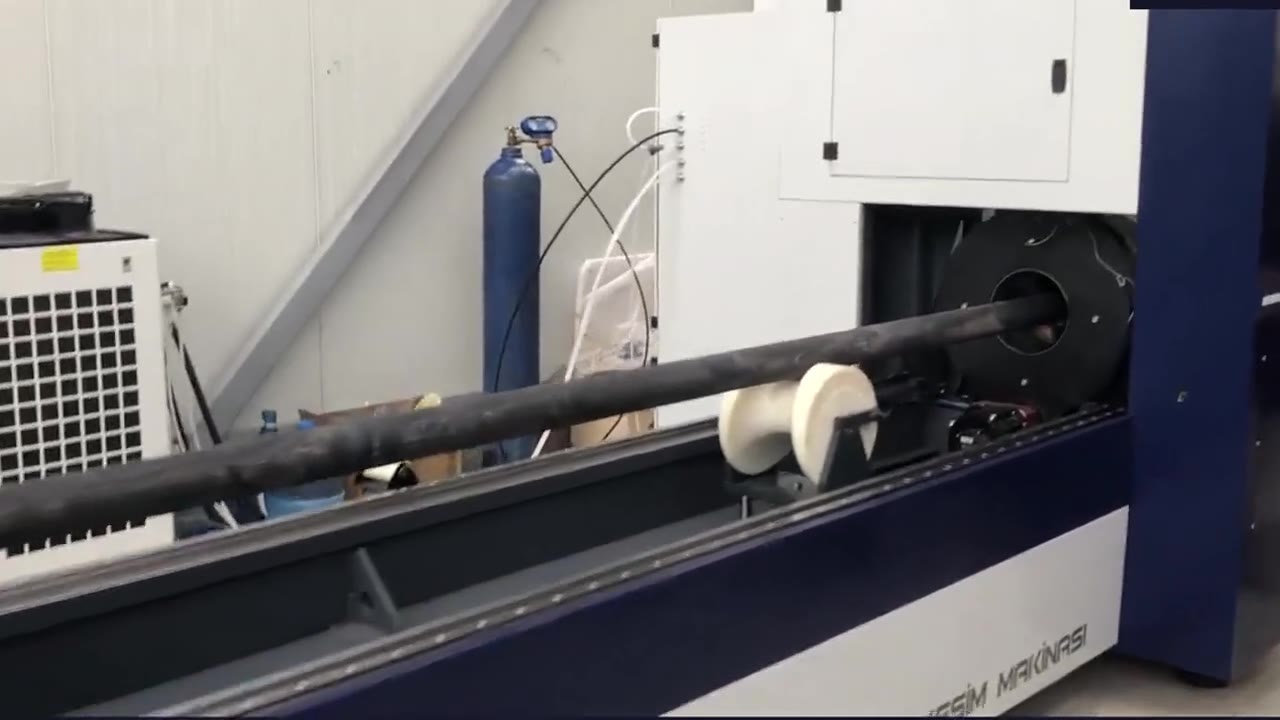
On a tube laser, the material is chucked, rotated and fed through the cutting head while the head works in a synchronized path around the section. In a single program the machine can produce the length cut, end profiles, copes for mitred joints, slots, hole patterns and part marking. On a conventional line those steps are separate operations — saw, deburr, layout, drill, notch — carried out at separate stations with separate handling.
The consolidation changes what happens downstream. Copes and end preparation cut to the program mean the fit-up at the welding bench is closer to net, which is the measurable benefit worth checking against your own weldments rather than assuming.
Two machine formats, two different jobs
Dedicated pipe and profile machines (the Mekotek FLP family, see pipe and tube fiber lasers) are built around the tube: a chuck and material-feed system pulls stock through the cutting zone, with follower supports along the bed to keep long, unsupported lengths from deflecting as they rotate. These machines are purpose-built for round, square, rectangular and open-profile section, and the mechanical design — chuck sizing, support spacing, feed-through length — is set for tube work as the primary and often only job the machine will do.
Sheet and tube combination machines (FLO-P and FLC-P — see sheet and pipe fiber lasers) add a tube-cutting attachment or auxiliary chuck to a flat-bed cutting platform. The same laser source and gantry cut sheet on the table and switch over to process round or square tube through a secondary support and rotation fixture. The tradeoff is inherent in the format: one machine covers two process types, but neither process gets a bed and support structure built exclusively around it.
Both formats can produce the same features — copes, slots, holes, end cuts — on round, square and rectangular tube and on open profiles such as angle and channel. The difference is in throughput on tube-dominant work, in how much of the bed and cycle time is dedicated to sheet versus tube, and in the mechanical arrangement for supporting long stock.
Chuck, support and loading arrangements
On a dedicated tube machine, the chuck and follower-support arrangement is sized for the diameter and length range the model is built for. Longer, thinner-wall tube needs more support points along its length to avoid deflection or vibration during rotation; shops running long structural tube should ask specifically how the follower rest system on a given model handles their longest routine part, not just its rated maximum length.
On a combo machine, the tube-cutting attachment has a narrower support envelope because it shares floor space and mechanical budget with the sheet-cutting gantry. That is not a defect — it reflects the machine's role as a mixed-work platform rather than a tube-first line.
Loading also differs by model and configuration:
- Manual loading — an operator places and chucks each piece of stock. Adequate for lower volume or highly mixed section sizes where automated infeed would need frequent reconfiguration.
- Semi-automatic loading — a loading rack or magazine feeds stock to the chuck with less manual handling per cycle, reducing operator time on repeat-length runs.
Confirm which loading method a specific FLP or FLO-P/FLC-P model uses, since it is a configuration decision tied to the model and the automation package, not a universal feature of "tube lasers" as a category.
A related loading question is single-shift versus multi-shift operation. A manually loaded machine ties operator presence to every load cycle, which is a real constraint on unattended or lights-out running. Semi-automatic infeed reduces that dependency for repeat-length production but adds a magazine or rack that has to be reconfigured when the part length or section size changes. Weigh this against your shift pattern before assuming that "semi-automatic" is a strict upgrade over manual loading for every job mix.
Remnant and drop handling
Tube cutting produces drop at the trailing end of every bar, and program nesting determines how much usable length is left as remnant versus scrap. On a dedicated machine, remnant handling is generally built into the chuck-and-feed cycle: the machine advances stock, cuts, and ejects drop as part of the normal sequence. On a combo machine, remnant handling for the tube side depends on the specific attachment design. Either way, ask how the machine you are evaluating manages trailing remnant and whether that remnant is a re-loadable length or scrap, since that materially affects your material yield calculation.
Programming for 3D tube features
Cutting a hole or slot into the side of a round or square section is a three-dimensional problem: the software has to unroll the section's surface so the cut path compensates for the change in beam angle and standoff as the head moves around the profile, and it has to sequence copes and end preparation so the part stays supported until the final release cut. Tube-specific CAM software handles this unrolling and sequencing; it is a different programming discipline from 2D sheet nesting, and shops moving from sheet-only cutting to tube should budget time for operators to learn it, separate from any time spent learning the machine itself.
Weld-prep geometry — bevelled cope angles for mitred tube joints, back-relief cuts, or land dimensions on an end prep — is programmed the same way as any other tube feature, but it is worth reviewing sample cut files against your welding procedure before committing to a program library, since a cope angle that looks correct in CAD can still leave a poor land condition on thin wall material.
Tolerance and weld-prep implications
Tube laser cutting produces cut edges to the machine's stated positioning and repeatability figures, which is generally tighter than sawing and drilling as separate operations, and it removes the accumulated error that comes from re-fixturing a part between a saw, a layout table and a drill press. Whether that translates into less weld-bench fit-up time on your parts is something to verify with a trial cut on your own drawings and tolerance callouts — wall thickness, section tolerance from the tube mill, and joint design all affect the result independently of the cutting machine.
Open profiles and irregular section
Angle, channel, flat bar and other open profiles are handled differently from closed round or square tube because there is no continuous wall to chuck against on all sides. Both dedicated and combo machines can process open profile, but the fixturing has to account for the section resting unevenly in a vee-block or chuck jaw designed primarily for round and square stock. If open profile is a routine part of your mix, ask the machine builder how the specific model clamps and supports that geometry, and request a sample cut on your actual profile rather than a similar-looking one from a spec sheet photo.
Mixed-section runs — round tube one shift, angle the next — also affect changeover time. Reconfiguring chuck jaws or vee-blocks between section types takes operator time that a tube-dominant shop running one section family all day does not incur. Track this changeover time separately from cycle time when comparing machines, since a machine with a faster per-part cycle can still lose the comparison if it needs more setup time between section changes.
Deciding between dedicated and combo based on your mix
The decision comes down to volume mix, not machine capability, since both formats can produce the same feature set within their supported diameter, wall and length range:
| Your situation | Format to evaluate first |
|---|---|
| Tube and pipe are the majority of cut volume | Dedicated FLP tube and profile machine |
| Sheet and tube volumes are both substantial but neither dominates | FLO-P / FLC-P sheet and tube combination |
| Tube work is occasional relative to sheet cutting | FLO-P / FLC-P combination, or outsource tube runs |
| Long, thin-wall tube with tight deflection control needed | Dedicated FLP — check follower-support spacing for your part length |
| Floor space or capital budget supports one machine only | Combination machine, sized against both workloads |
How mixed volume should actually drive the decision
A useful exercise before quoting either format is to tally the last three to six months of cut hours or cut length by process — sheet versus tube versus profile — from your job records rather than from memory. Shops can misjudge this split because tube jobs are more visible on the shop floor (racks of pipe, obvious welding fixtures) even when sheet cutting consumes more machine hours, or the reverse. If the tally shows one process consistently ahead of the other by a wide margin, the dedicated machine for that process is the straightforward answer. If the split is closer to even, price both a dedicated-plus- separate-sheet-laser combination and a single combo machine against your floor space and capital budget, since the combo's advantage is footprint and capital efficiency, not raw tube throughput.
What to confirm before you quote a model
Diameter, wall thickness and stock length capacity vary by individual model within both the FLP family and the FLO-P/FLC-P family, and they change as models are updated. Confirm, for the specific model under consideration:
- Maximum and minimum round diameter, and the equivalent square/rectangular section range
- Maximum wall thickness at the diameters you actually run
- Maximum feed-through or stock length, and how that interacts with your bar supplier's standard lengths
- Chuck type and follower-support spacing for your longest routine part
- Loading method (manual or semi-automatic) and whether it matches your batch sizes
None of these figures should be assumed from a competitor's published table or from a prior model generation. Request the current specification sheet for the exact model, and if possible run a sample part through a cutting trial before committing to a configuration.
For the two Mekotek formats described here, start with pipe and tube fiber lasers for tube-dominant volume, or sheet and pipe fiber lasers where sheet and tube work share a shop.
Related equipment: Pipe & tube fiber lasers · Sheet + tube combo lasers
See the machines behind the article
Browse the full Mekotek product brochure, or book a live demo and watch a Mekotek tube laser cut your own profiles.
Related Articles
Fiber Laser Welding Guide: Process, Fit-Up and Power Selection
Handheld fiber laser welding trades broad heat input for narrow, concentrated heat — and it demands tighter fit-up than arc welding to deliver that benefit.
Material Handling Around a Laser: From Manual to Automated
The laser spends part of every shift waiting on metal to be moved, not cut. A stage-by-stage look at handling sheet and tube, and when automating it is justified.
What to Ask Before Putting a Laser Cutting Machine on Your Network
A buyer's question list for connecting production equipment: what data is worth collecting, who controls it, and how to keep the machine off the office network.