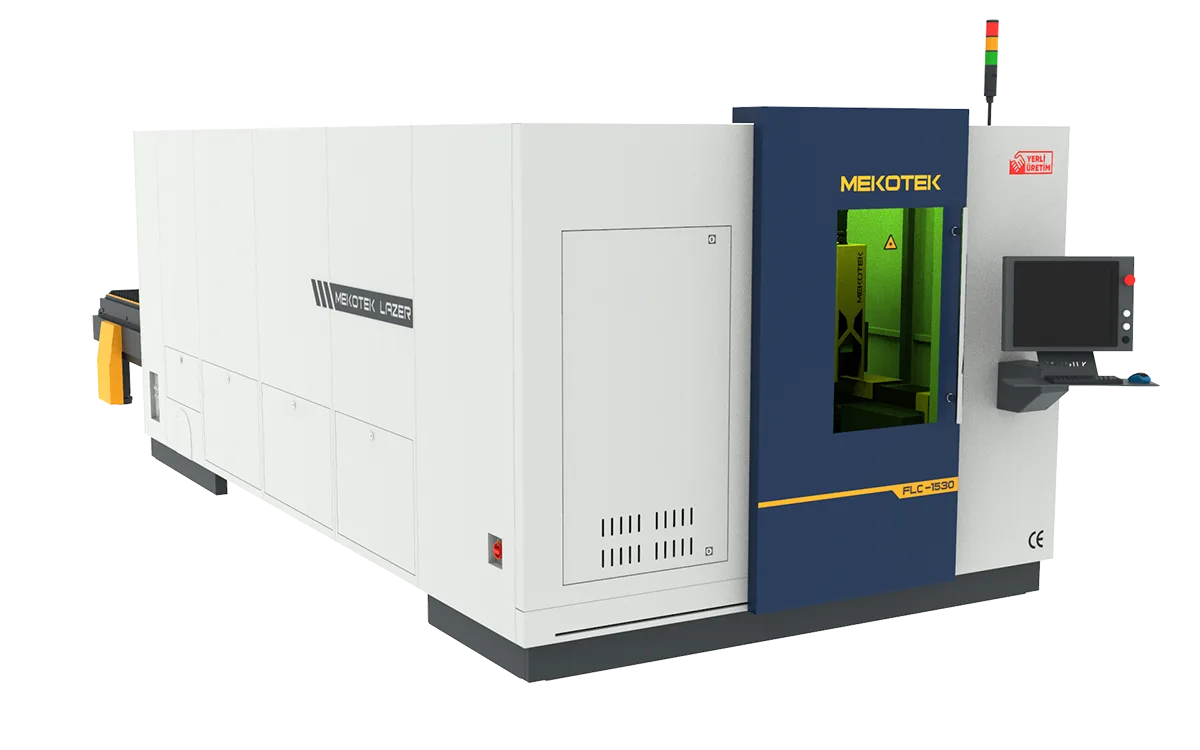
Open vs Enclosed Fiber Lasers: Which Format Fits Your Shop?
By Brad Cairns
Published Updated
The choice between an open-table and an enclosed fiber laser is a floor-plan and workflow decision, not a cutting-performance one. Both formats cut with the same laser technology; what differs is how material reaches the bed, how fume and light are contained, how much floor space the cell occupies, and how you plan guarding around it. Before comparing specification sheets, work through how the machine will actually sit and run in your building.
Footprint and floor plan
An enclosed machine's cabin adds width, depth and often height to the working envelope beyond the bed size itself, because the enclosure, its access panels and its extraction connections sit outside the cutting area. An open-table machine's footprint is closer to the bed and axis travel alone, with safety clearance handled at the area level rather than by a fixed cabin wall. That distinction matters most when you are fitting a machine into an existing bay rather than a purpose-built one: measure clear floor space, not just the machine's stated dimensions, and include room for material staging, offcut removal and the service clearance the supplier specifies for the model. For an enclosed cell, also confirm the swing or slide clearance needed for the access doors and any roof clearance for enclosure height, since these are easy to miss against a column grid or an existing crane bay.
Where floor space is tight or shared with other equipment, an open-table format with a smaller surrounding footprint may fit a bay that an enclosed cabin will not. Where floor space is available and the layout already separates the laser from other trades, the enclosure's larger footprint is less of a constraint.
Loading and handling access
How material and parts move on and off the bed drives a large share of this decision. An open-table machine gives an operator or a crane and forklift direct, unobstructed access to the bed from above and from the sides, so a sheet can be dropped straight on and a finished part or skeleton lifted straight off without an intermediate step. That matters most in a shop running varied jobs with frequent sheet changes, where the time spent loading is a meaningful share of the cycle.
An enclosed machine routes loading and unloading through the cabin's access points, following a defined sequence rather than open access from any direction. This adds a step to each load cycle, but it is the same containment that keeps fume, dust and process light inside the enclosure rather than in the surrounding shop. Whether that sequence is a meaningful time cost depends on how often you change sheets in a shift: a shop running long, continuous jobs feels it far less than a shop reloading every few minutes.
Record how material actually arrives at the machine today — by crane, forklift, manual handling or an existing conveyor — before assuming either format's loading pattern will work unchanged.
Fume and particulate extraction
Cutting produces fume and particulate that has to be captured and removed regardless of format; the two formats differ in where that capture happens. An enclosed cabin contains the process at the source, so extraction can be ducted directly from the cabin with less reliance on ambient airflow in the surrounding shop. An open-table machine relies on capture at or near the bed combined with shop-level ventilation planning, since there is no cabin wall to contain the fume before it disperses.
Neither format removes the underlying obligation to size and maintain extraction correctly for the material being cut — coated, painted, galvanized and stainless materials generate different fume constituents, and extraction capacity should be planned against the actual materials on your worksheet, not against the machine format alone. Confirm ducting routing and extraction unit sizing for the specific model and site before installation; retrofitting ducting into a finished bay after the fact is a foreseeable point of cost and schedule friction that is better solved on paper first.
Guarding, interlocks and light containment
An enclosed machine's cabin functions as a physical guard, with interlocked access points that are engineered as part of the machine. That contains process light within the enclosure and reduces the amount of area-level control a shop has to design around a laser cutting cell running near other work.
An open-table machine has no cabin wall around the beam path, so light containment and access control are handled at the cell and area level instead — perimeter guarding, curtains, interlocks on any access points you add, and control over who and what moves near the cutting area while it runs. This is a legitimate way to run an open-table cell, but it puts more of the guarding design and its ongoing maintenance on the shop rather than on a built-in enclosure. Where a laser cell sits close to walkways, other machines or staff not directly operating it, that additional design and maintenance burden is a real factor to weigh, independent of the cutting capability of either format.
Noise
Laser cutting itself is not necessarily the loudest process in a fabrication shop; assist gas flow, extraction fans and material handling around the machine often contribute more to the ambient level at the cell, according to OSHA general industry noise guidance. An enclosure can attenuate some of that noise by containing the cutting area, though the extraction system serving either format still moves air and generates its own noise regardless of format. If noise exposure is a concern for your site — because the laser sits near an office, a break area or other close work — that is a question to raise directly with the supplier for the specific model and extraction configuration rather than to assume from the format alone.
Site prep and utilities
Both formats need confirmed electrical supply, compressed air or bottled assist gas, and a chiller or cooling arrangement for the laser source — none of that changes with the enclosure decision. What does change is how those services connect to the machine: an enclosed cabin's service connections are made through defined ports on the enclosure, while an open-table machine's connections reach the resonator, chiller and gas supply more directly at the machine base. Have your electrical supply, compressed air or gas delivery, and cooling arrangement confirmed in writing for the exact model and configuration before finalizing a layout, and plan the extraction ducting route at the same time rather than after equipment arrives on site. A written site-readiness checklist from the supplier, reviewed against your own building drawings, is the practical way to catch a mismatch before it becomes a schedule problem.
Which shop conditions favour each format
| Shop condition | Favours |
|---|---|
| Varied jobs with frequent sheet changes and crane or forklift loading | Open-table |
| Shared bay with other trades and staff moving nearby | Enclosed |
| Tight floor space with limited clearance for a cabin | Open-table |
| Priority on a clean surrounding floor for downstream finishing or assembly | Enclosed |
| Extraction plan already built around an open cell | Open-table |
| Preference for guarding and light containment built into the machine | Enclosed |
| Long, continuous runs with infrequent reloading | Enclosed |
| Frequent, short-run reloading where an access sequence adds real time | Open-table |
What the format does not change
Some buyers expect the enclosure to change cutting performance. It does not, in either direction. Cut quality, accuracy and speed come from the laser source, the motion system, the cutting head, the assist gas and the parameters — all of which are specified per model. Compare the published specification table for the specific models you are shortlisting rather than reasoning from the format. If two candidates differ in working area, power or motion specification, that is what you are actually comparing, not the presence or absence of a cabin.
Practical questions to settle before you decide
- How does material physically reach the machine today, and who moves it?
- What is the true clear floor space available, including access, staging and service clearance?
- Where will fume extraction be routed, and does that favour a contained process?
- Who else works within the surrounding area, and on what shifts?
- How often will you change sheets in a typical shift?
- Do you need tube capability, now or within the horizon of this investment?
- Which specific models in each family match your required working area and power?
Answer those and one column of the table above should stand out as the better fit for your shop.
View the Free Product Brochure — compare both families with their specifications: /free-brochure
Common questions
Is an enclosed machine safer? An enclosure with interlocks contains the process and simplifies how you plan guarding around it. It does not remove your obligation to plan training, procedures and extraction correctly for your site. Confirm the requirements that apply to your operation with your own safety and insurance advisers.
Does an enclosure slow loading down? It adds a defined access sequence rather than open access from any direction. Whether that matters depends on how many sheet changes you make per shift.
Can I get tube capability in either format? The sheet plus pipe family is available in open, double-table and fully enclosed configurations, so the format choice and the tube decision are independent.
Does the enclosure change what extraction I need? It changes where capture happens, not whether extraction is needed. Extraction should be sized against the materials you cut, for the specific model, regardless of format.
Sources
- Occupational Safety and Health Administration (OSHA), "Laser Hazards"
- OSHA, "Occupational Safety and Health Technical Manual, Section III Chapter 6"
- Canadian Centre for Occupational Health and Safety (CCOHS), "Lasers" These sources support generic regulatory and ventilation context only. They do not describe or substitute for Mekotek product specifications, which are confirmed per model.
Book a Free Live Demo — stand at both formats with your own material and see which loading sequence fits your shop: /demo
Related reading
See the machines behind the article
Browse the full Mekotek product brochure, or book a live demo and watch a Mekotek fiber laser cut your own material.
Related Articles
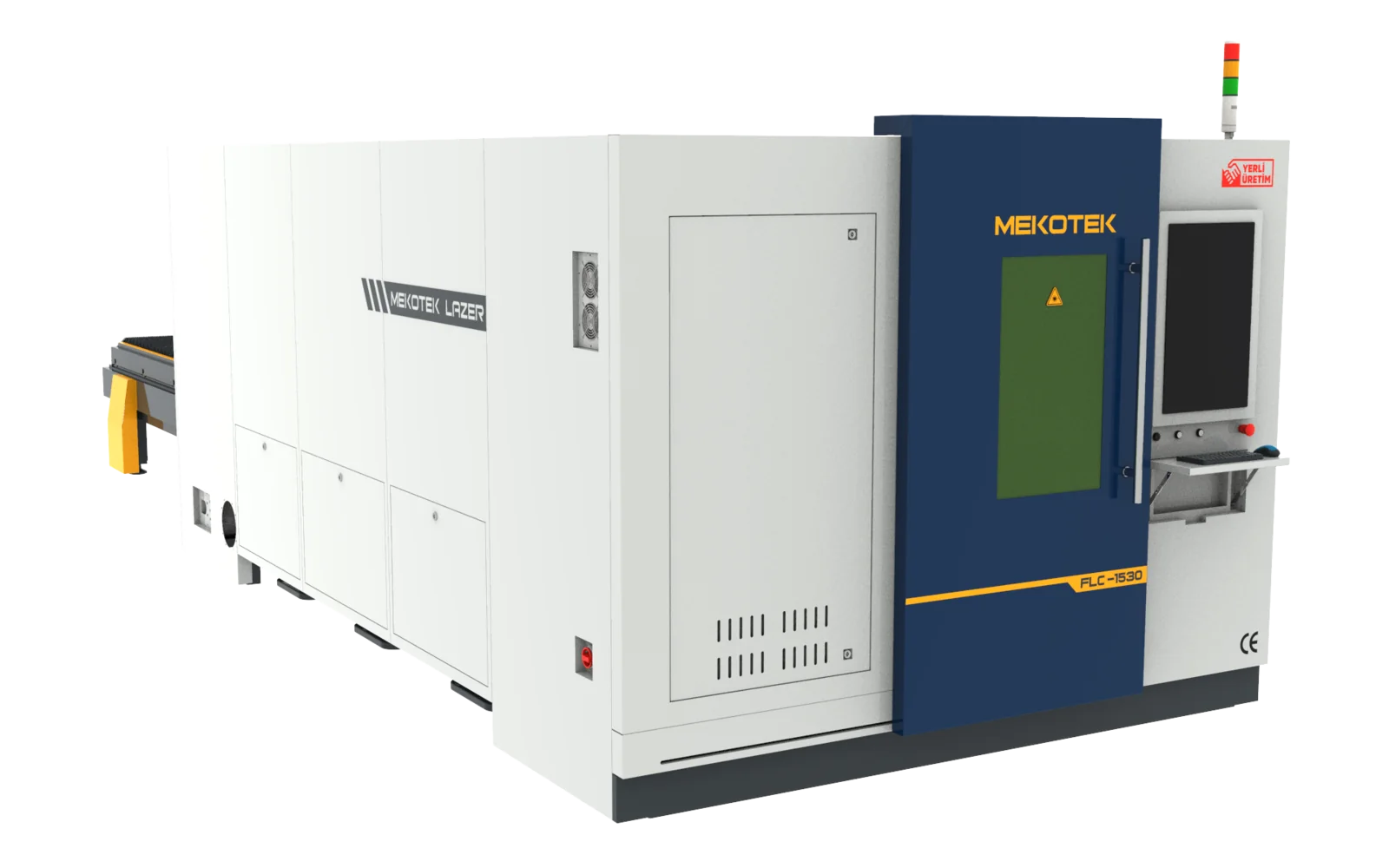
How to Choose a Fiber Laser Cutting Machine: A Buyer's Framework
A step-by-step framework for specifying a fiber laser cutting machine and bringing it in-house, from part mix through commissioning and process qualification.
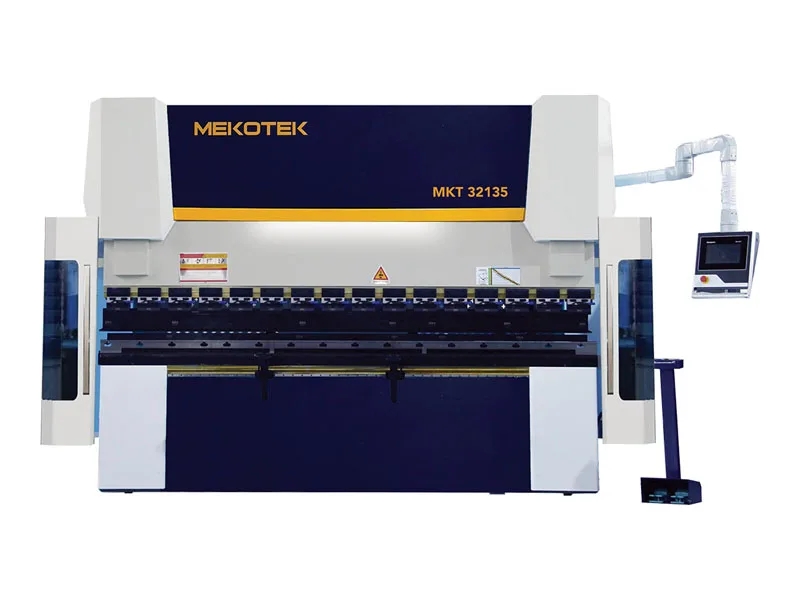
Press Brake Buying Guide: Sizing Tonnage, Length and Tooling
Cutting and bending are sequential operations. This guide covers how to size a CNC press brake once your laser has already made the cut.
Choosing the Right Laser Power for Your Business: A Sizing Worksheet
Size laser power from your own material mix and shift pattern, not a generic chart. A worksheet you fill in with your own numbers before comparing machines.