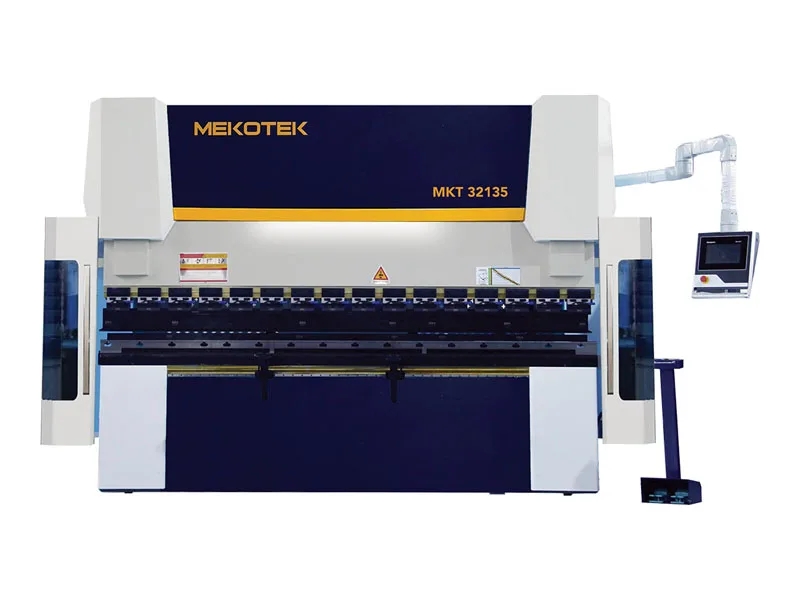
Press Brake Buying Guide: Sizing Tonnage, Length and Tooling
By Brad Cairns
Published
Cutting and bending are not two ways to do the same job. A laser separates a blank from sheet stock; a press brake forms that blank into a three-dimensional part. Nearly every sheet metal part that gets bent has already been cut, so the question a fabricator actually faces is not laser or brake — it is which brake to put downstream of the laser already running, or already planned.
Correcting the premise
Framing cutting and bending as a choice comes from conflating "how do I get this part to shape" with "how do I separate this part from the sheet." A laser cuts a flat profile. A press brake bends that flat profile along a straight line using a punch and die. Neither process substitutes for the other on a formed sheet metal part — the laser produces the blank, including any bend-relief notches or K-factor-adjusted flange lines, and the brake forms it. The one place the two processes genuinely compete is on parts that could be formed by other means entirely, such as roll forming or stamped tooling, and that is a production-volume decision, not a cutting-versus-bending one.
With that settled, sizing the brake itself comes down to four interacting numbers: tonnage, bending length, throat depth and open height, and the control and tooling that determine how fast an operator can set up and hold an accurate angle.
Tonnage: matching force to material and bend geometry
Tonnage is the force the ram can deliver across the full bed length at rated capacity. Required tonnage rises with:
- Material thickness — force requirement increases sharply, not linearly, as thickness increases, because bending force is roughly proportional to the square of thickness in the standard air-bending formula.
- Material tensile strength — stainless and higher-strength steels need more force than mild steel of the same thickness; aluminium generally needs less.
- Bend length — a longer bend line needs proportionally more total force since tonnage is rated per linear length of bed.
- Die opening (vee width) — a wider vee reduces the force needed for a given thickness, but it also increases the minimum inside bend radius achievable, so vee selection is a part-geometry decision as much as a force decision.
A brake sized only for your average job will be undertonnaged for your thickest or longest routine part. Size to the combination of thickest material and longest bend you run regularly, not to an average across your job mix, and add margin for die openings narrower than the ideal, since tight-radius requirements on some parts will force you into a narrower vee than the force calculation alone would suggest.
Off-centre loading and bending length
Published tonnage is rated across the full bed length used evenly. Bending a short part off to one side of the bed — common in job shops running mixed small parts — concentrates load on a narrower section of the ram and bed than the rated figure assumes, which can increase local deflection and affect angle consistency along that bend even though the part is well within the machine's rated tonnage. Crowning systems (below) exist specifically to compensate for this kind of deflection, and asking how a given machine handles off-centre loads is a reasonable question to put to any brake builder, rather than assuming the rated tonnage figure applies uniformly regardless of where the part sits on the bed.
Bending length itself is simpler to size: it has to exceed your longest routine bend with margin for die length and clamping, but buying substantially more bed length than your parts ever use adds cost and floor space without benefit.
Backgauge axes and repeatability
The backgauge positions the sheet for each bend, and its axis count and control sophistication are a major driver of setup time and repeat-part accuracy. A backgauge with more controlled axes — X travel plus some combination of R (height), Z (offset for angled or flanged parts) and finger-width adjustment — lets the control position the stop automatically between bends instead of requiring the operator to reset a mechanical stop by hand. More axes generally mean faster changeover between bend sequences and less operator-dependent variation between parts in the same run, which matters more as batch size and bend-sequence complexity increase.
Crowning
A press brake bed deflects slightly under load, particularly across long bending lengths, and that deflection produces a bend angle that varies along the length of the part — tighter in the middle, more open at the ends — unless the machine compensates. Crowning systems counteract this by pre-loading the bed or adjusting the die bar to offset the expected deflection. Ask how crowning is implemented on a specific machine (mechanical wedge, hydraulic, or another method) and whether it is manual or automatically adjusted by the control, since manual crowning that is not re-adjusted for different jobs delivers little benefit over having none.
Tooling: style, inventory and setup time
Tooling style (American, European or another standard) determines what punches and dies you can source and whether existing tooling from another machine will fit. Before committing to a brake, confirm:
- Whether your existing tooling inventory is compatible or needs replacement
- How quickly punches and dies clamp and change on the model under consideration
- Whether the tooling range covers the vee widths and special profiles (offset, hemming, radius) your parts require
Tooling changeover time compounds across a day of mixed small-batch work. A brake with fast clamping and a well-organized tool rack can offset a slower nominal cycle time if your job mix involves frequent tool changes; measure changeover time on your own job sequence rather than comparing single-cycle speed specifications alone.
CNC control and offline programming
A CNC control that lets an operator or programmer build a bend sequence offline — entering material, thickness, bend angles and flange lengths before the part reaches the machine — shortens the time between a part arriving at the brake and the first good bend. Graphical sequencing that shows collision checks between the tooling and the part geometry before the first bend is cut reduces scrapped parts on unfamiliar geometries. Confirm what programming capability ships with a specific control rather than assuming "CNC" implies offline programming by itself.
Springback and angle control
Every formed material springs back slightly after the punch releases, and the amount varies with material, thickness, grain direction and die opening. Angle-correction methods range from manual overbend compensation set by the operator to closed-loop systems that measure the actual angle during the bend and adjust ram position in real time. Ask which method a given machine uses and whether it has been demonstrated on your specific material and thickness combination — springback behavior on a new alloy or gauge should be verified with a test bend before it goes into a production program.
Safety guarding and operator position
Press brakes place an operator's hands close to a closing die during every cycle, and guarding — light curtains, laser guards, or physical barriers — combined with two-hand or foot-pedal controls is the primary control against point-of-operation injury. Guarding requirements and configurations vary by jurisdiction and by machine; confirm the guarding package fitted to a specific machine and how it is positioned relative to the operator's normal working position before it is installed, rather than assuming a standard package covers every part geometry you bend.
Matching brake capacity to laser output
A laser that is cutting blanks faster than the brake downstream can form them creates a buffer of cut parts waiting on bending, which shows up as work-in-process inventory and schedule slip rather than as a bending-machine problem on paper. Before adding or upsizing laser capacity, estimate bend cycle time (setup plus per-bend time) across your typical job mix and compare it against expected laser output on the same jobs. If bending is already the slower step, a faster laser increases queue time at the brake rather than shop throughput, and the better investment may be a second brake, an additional backgauge axis to cut setup time, or improved tooling changeover — not more cutting capacity.
Throat depth and open height
Throat depth — the distance from the die to the machine's back frame — and open height, the maximum gap between the ram and bed with tooling installed, decide which part shapes physically clear the machine. A deep box section or a part with a long return flange needs enough throat depth to let the formed leg swing clear of the frame as the bend progresses, and enough open height to load the part with tooling already in place. These figures do not show up in a tonnage comparison but rule parts in or out just as decisively; check them against your deepest or most enclosed part geometry, not just your flattest one.
Specification checklist
Before requesting a quote, have these figures for your own parts, not the machine's rated maximums:
- Thickest material and its grade, and the longest bend length in that material
- Vee widths and minimum inside radii your parts require
- Tooling standard currently in your shop, if any
- Backgauge axes needed for your bend sequences (X, R, Z, finger width)
- Whether crowning compensation is required for your longest bends
- Guarding configuration required at your site
- Expected batch sizes and how often tooling changes between jobs
Confirm the exact tonnage, bending length, throat depth and backgauge travel for any model you are evaluating against the current published specification table — do not assume figures from a similar-looking model carry over. For the current Mekotek CNC press brake range, see press brakes.
Related equipment: CNC press brakes
See the machines behind the article
Browse the full Mekotek product brochure, or book a live demo and see a Mekotek CNC press brake form your own parts.
Related Articles
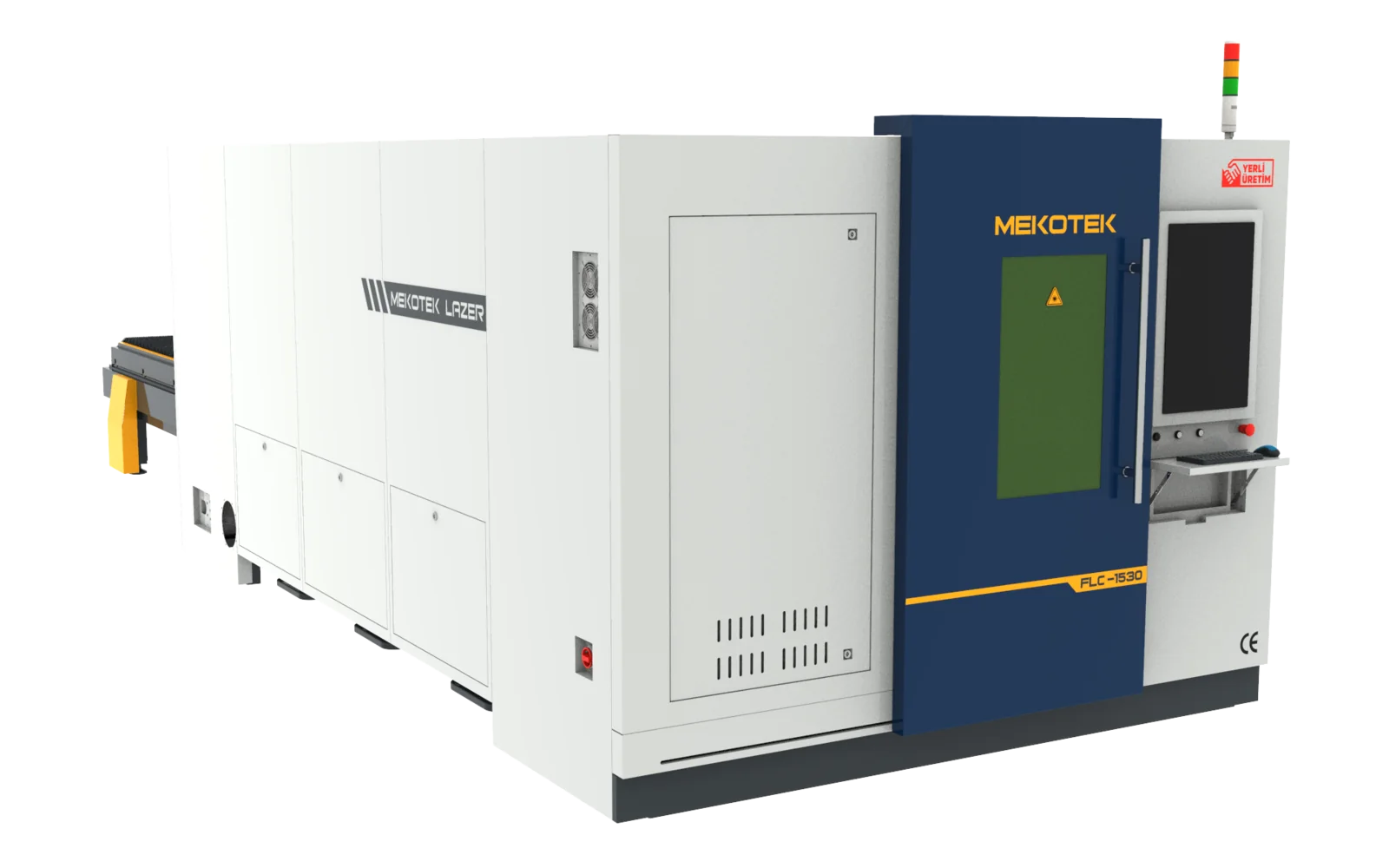
How to Choose a Fiber Laser Cutting Machine: A Buyer's Framework
A step-by-step framework for specifying a fiber laser cutting machine and bringing it in-house, from part mix through commissioning and process qualification.
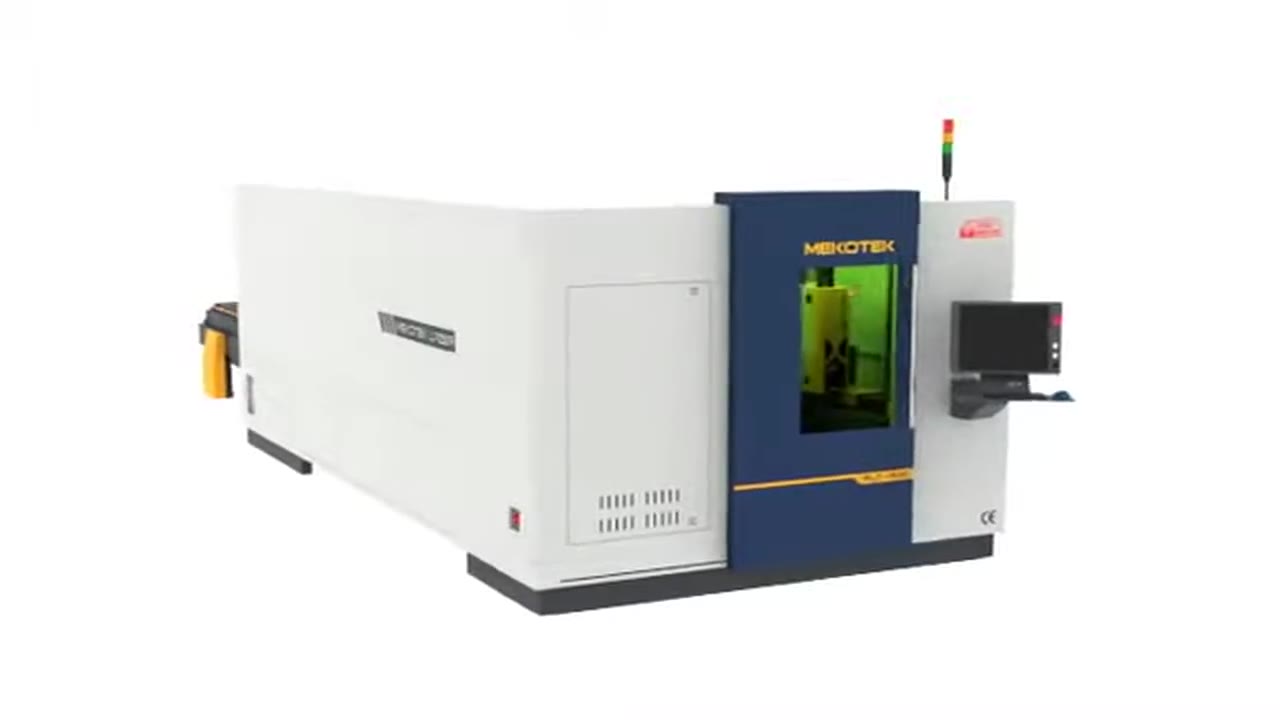
Choosing the Right Laser Power for Your Business: A Sizing Worksheet
Size laser power from your own material mix and shift pattern, not a generic chart. A worksheet you fill in with your own numbers before comparing machines.
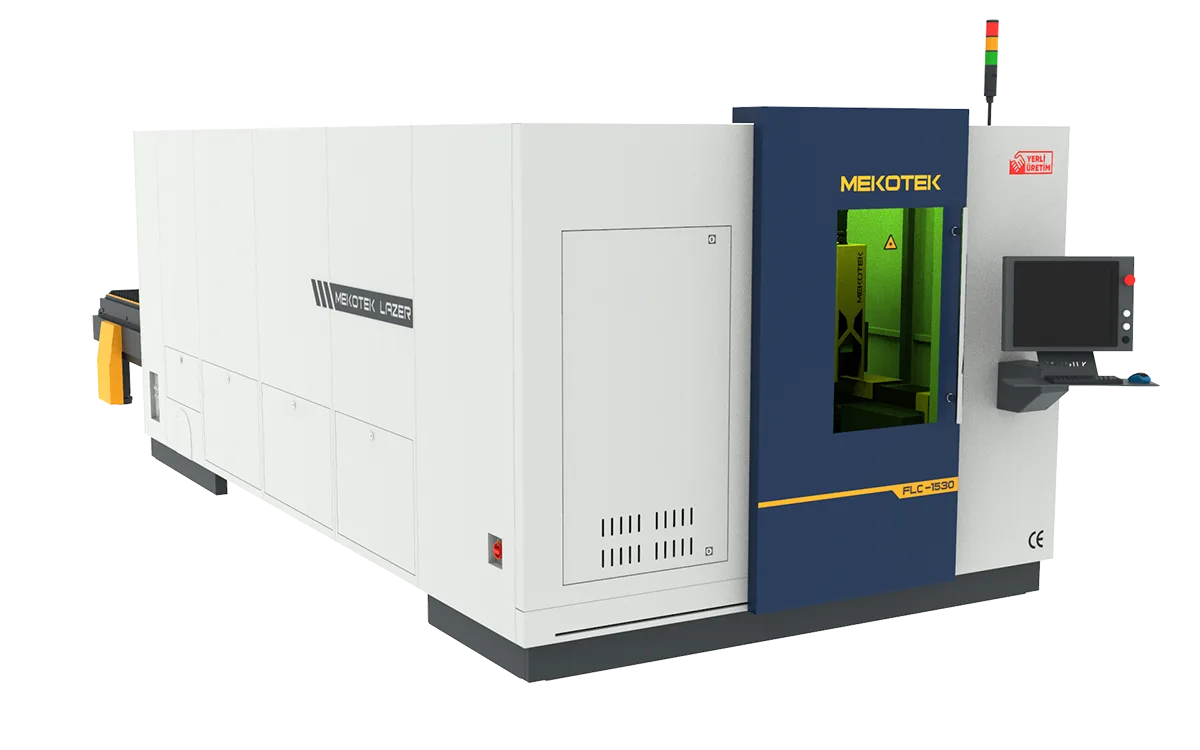
Open vs Enclosed Fiber Lasers: Which Format Fits Your Shop?
Open-table and enclosed fiber lasers cut the same way but run differently on your floor. Compare footprint, loading, extraction and site prep before you choose.