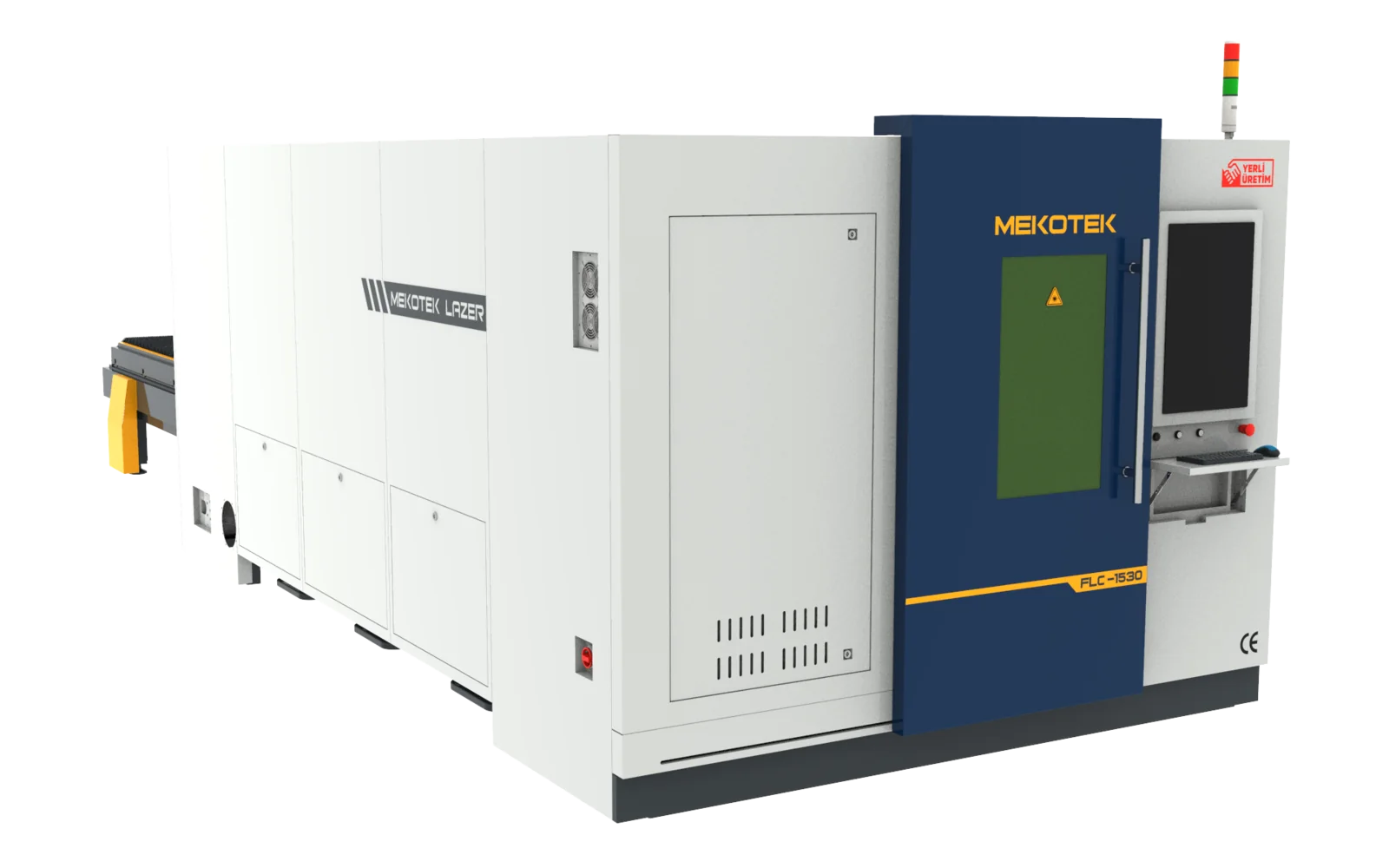
How to Choose a Fiber Laser Cutting Machine: A Buyer's Framework
By Brad Cairns
Published
A fiber laser purchase is really a series of smaller decisions, each of which narrows the field of candidate machines. Get the order wrong — starting with power, or with a headline work-area number, before you have described the parts you actually run — and you end up comparing machines that were not competing for the same job in the first place. This guide works through that order: part mix, work area, power, format, motion and frame, gas strategy, extraction, software, then the site and staffing work that has to happen before the machine arrives.
Start with the part mix, not the machine
Before looking at any machine, write down what you cut. That means:
- Materials. Mild steel, stainless, aluminum, or a mix. Reflective materials such as aluminum, copper and brass behave differently under a laser than mild steel and affect power and gas choices later.
- Thickness range, not a single number — the thinnest gauge you run in volume and the thickest plate you cut at all, even occasionally.
- Sheet size and stock format — what your steel service centre actually delivers, and whether you also run remnant or odd-sized material.
- Volume — parts per shift or per week, and how many of those are repeat jobs versus one-offs.
- Tolerance and edge-quality requirements for your most demanding parts, since these can rule out shortcuts elsewhere in the specification.
This list becomes the basis for every decision below, and it is also what you hand to a machine supplier when you ask for a quote or a cutting sample.
Work area and format
Size the work area to the sheet you buy, with margin for handling and offcuts — not to the largest single sheet you have ever run once. An oversized bed costs more to buy, more to heat and cool, and more floor space to service, for capacity you rarely use.
Decide early whether the shop needs a single-table machine or a double shuttle-table configuration that lets one table be loaded while the other cuts. That decision is about throughput and changeover time, not raw work area.
Power selection
Laser power determines the practical maximum thickness you can cut, and the cutting speed at every thickness below that maximum. It does not change what materials you can cut in principle, and it is not something to size against your rarest, thickest job. Size power against the material and thickness combination that consumes the most machine hours in your current mix, then add a margin the supplier can justify against your data — not against a generic rule of thumb. A supplier that offers you a cutting sample on your own material and gauge, cut at the power level under discussion, gives you a way to verify the choice before you commit.
Open vs enclosed
An open-table machine gives operators direct crane and forklift access to the bed, which speeds loading on varied work and odd-sized stock. An enclosed machine contains the cutting process inside an interlocked cabin with fume extraction, which keeps the surrounding floor cleaner and simplifies safety planning around the machine. Neither is categorically better — the choice follows how material physically moves through your shop, how much floor space you have around the machine, and how the rest of your safety and housekeeping plan is built. This decision deserves its own comparison against your floor layout before you shortlist models.
Sheet-only vs sheet-plus-tube
If a meaningful share of your work involves pipe, tube or structural profile, a combination sheet-and-tube machine or a dedicated pipe and profile machine removes a step from your process — material that would otherwise go to an outside tube-cutting shop, or to a separate machine and separate programming workflow, runs on the same platform. This is a workflow decision as much as a capacity one: confirm how tube changeover time and sheet changeover time interact on a combination machine before assuming it replaces two dedicated machines without any compromise.
Motion, drive and frame
Ask any supplier for the axis travel, axis speed and stated accuracy figures for the specific model under discussion, and treat category-level marketing claims as a starting point, not a substitute for that model's published specification table. Frame construction and drive type affect long-term accuracy retention and the machine's tolerance of a less-than-ideal shop floor — ask how the machine is meant to be foundationed or leveled, and whether that requires groundwork beyond a level slab.
Assist gas strategy
Cutting requires an assist gas — oxygen, nitrogen or compressed air, depending on material, thickness and the edge finish required. Decide early whether you will run cylinders, a bulk tank, or an on-site nitrogen generator, because that decision affects both the installation (piping, storage, ventilation) and the ongoing cost of running the machine. A generator has a capital cost and a maintenance routine of its own; cylinders and bulk delivery shift that cost into a recurring supply contract. Neither is universally cheaper — model it against your actual nitrogen consumption at your target cutting mix.
Extraction and filtration
Fume and particulate extraction is not optional equipment — it is part of the machine installation. Confirm the required extraction airflow for the model and enclosure configuration you are specifying, how filtration is sized and maintained, and how filter replacement or cleaning fits your maintenance schedule. On an open machine, extraction also interacts with general shop ventilation; on an enclosed machine, the cabin design does more of that work for you but still depends on correctly sized extraction.
Software and nesting workflow
A cutting machine is only as productive as the programming and nesting workflow feeding it. Confirm what CAD/CAM and nesting software the machine ships with or is validated against, how parts move from your existing drawing or ERP system into a cut file, and who on your team will own that step. This is also where tolerance requirements from your part mix come back into play — nesting software and cut sequencing affect part accuracy and material yield together.
Site prerequisites
Before you sign anything, confirm:
- Electrical supply — voltage, phase and amperage available at the intended location, and what the machine and its chiller require.
- Compressed air and gas supply and routing.
- Floor loading capacity and required foundation or leveling work.
- Rigging access — door widths, crane or forklift capacity, and the path from the dock to the final location.
- Space around the machine for service access, gas storage and material staging.
Specification-request checklist
When you request a quote, ask each supplier to confirm, in writing, for the specific model:
- Working area and table configuration (single or double table)
- Verified laser power options and the source of the axis travel/speed/accuracy figures
- Enclosure type and extraction requirements
- Tube capability, if applicable, including profile length and diameter limits
- Assist gas requirements and recommended supply method
- Electrical and utility requirements at the machine and at the chiller
- Software and nesting package included, and file formats supported
- What is included versus excluded from the quoted price (see the companion cost guide for how to build this list)
- Availability of a cutting sample on your own material and thickness
Bringing it in-house: staged implementation
Once a machine is selected, treat the installation as a project with distinct stages rather than a single delivery date.
Site survey. Confirm the site prerequisites above against the actual location, including a walk-through with whoever is responsible for electrical and gas work.
Utilities. Complete electrical, compressed air, gas and extraction work ahead of delivery. Utility work can be the longest lead item in the whole project and should start as soon as the machine is ordered, not when it arrives.
Rigging and placement. Confirm the rigging plan — path, equipment and crew — with the supplier or installer before delivery day, and make sure the floor and foundation work is complete and cured where required.
Commissioning. This is where the supplier's technicians level, align and calibrate the machine, connect utilities, and confirm the machine cuts to its specification before handing it to your team.
First-article and process qualification. Run your own parts — not a demonstration part — through the machine before calling the installation complete. Check dimensional accuracy, edge quality and cut speed against what you were quoted, and document the settings that produce a good part for each material and thickness you run regularly.
Operator ramp. Plan for a period where operators are cutting real production work under supervision or with supplier support available, rather than assuming full productivity from day one.
What to have ready before the machine arrives. Gas supply connected and tested, extraction ductwork complete, nesting software installed and at least one operator trained on the controls, and a first batch of real jobs queued for the first-article process.
Staffing for programming and operation
Confirm who will program parts, who will operate the machine day to day, and whether either role requires training beyond what the supplier provides at commissioning. A machine purchase decision should account for whether your current team can absorb this work or whether you need to hire or retrain before the installation date.
Programming complexity varies with part geometry and nesting demands, not just with machine brand. A shop running mostly simple flat plate work can often train an existing CNC operator on the machine's programming interface within a defined ramp period. A shop running complex nested assemblies with tight tolerance callouts should plan for a dedicated programmer role, or budget time for an operator to build that skill deliberately rather than picking it up between production runs.
Treat this staffing question as part of the purchase decision, not an afterthought for after delivery — a machine that outpaces your programming capacity will sit idle regardless of its capability.
Service and spares access
Ask about the supplier's parts and service structure for your region before you buy, not after something breaks. Confirm which components the supplier stocks locally, how service requests are handled, and whether documentation and wear-part part numbers are available to your maintenance team directly.
What a cutting sample should tell you
A cutting sample on your own material is the closest thing to a guarantee you will get before purchase. Send the supplier your actual thickness range and, where possible, your own drawings. When the sample comes back, check dimensional accuracy against your drawing tolerances, edge quality and dross on the cut faces, and ask what power, speed and gas settings produced the result — those settings are what you should expect to reproduce once the machine is on your floor.
Once the specification is settled, request a quote or book a demonstration against the exact list above, so every supplier you compare is answering the same questions.
See the machines behind the article
Browse the full Mekotek product brochure, or book a live demo and watch a Mekotek fiber laser cut your own material.
Related Articles
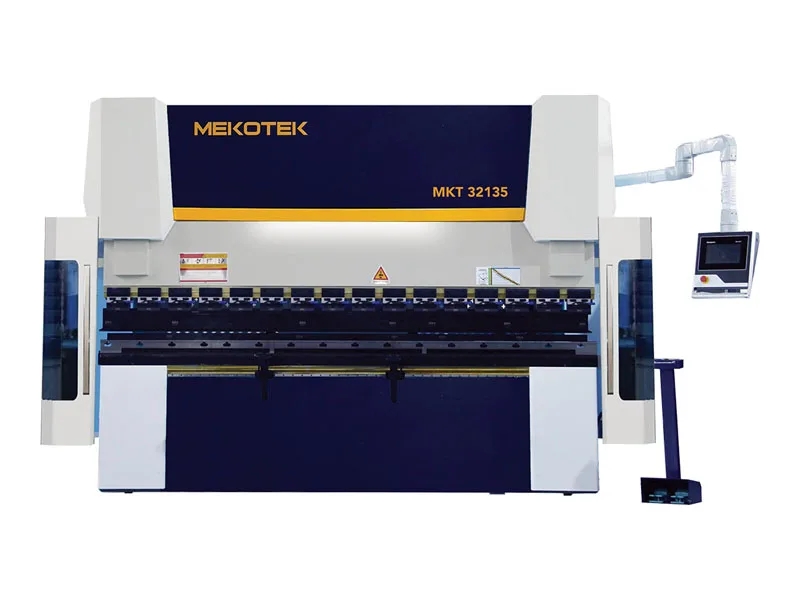
Press Brake Buying Guide: Sizing Tonnage, Length and Tooling
Cutting and bending are sequential operations. This guide covers how to size a CNC press brake once your laser has already made the cut.
Choosing the Right Laser Power for Your Business: A Sizing Worksheet
Size laser power from your own material mix and shift pattern, not a generic chart. A worksheet you fill in with your own numbers before comparing machines.
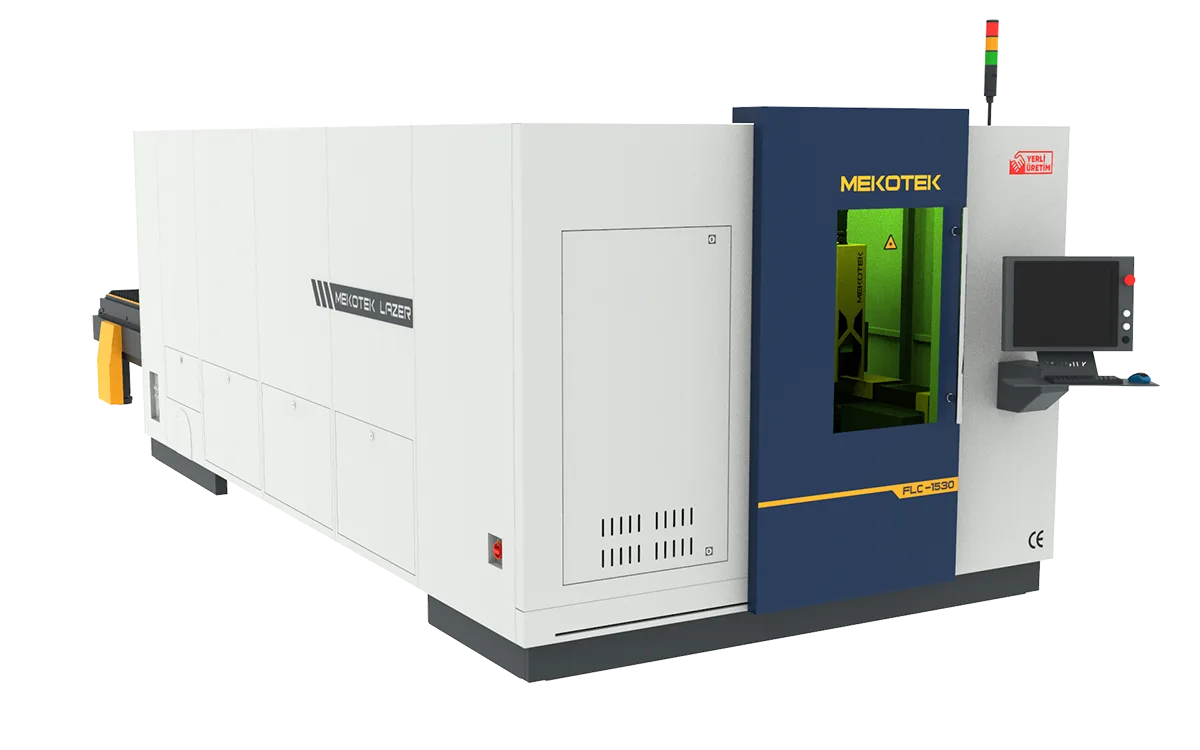
Open vs Enclosed Fiber Lasers: Which Format Fits Your Shop?
Open-table and enclosed fiber lasers cut the same way but run differently on your floor. Compare footprint, loading, extraction and site prep before you choose.