
Outsourcing vs. In-House Laser Cutting: Cost, ROI and Payback
By Brad Cairns
Published Updated
The decision to bring laser cutting in-house is a capital decision, and capital decisions are only as good as the cost data behind them. The data you need is already in your own purchase orders, invoices and shop schedules. The work is pulling it together in a form that lets you compare what you pay a supplier today against what cutting would cost, and deliver, if you owned the machine.
This is not a case for or against in-house cutting. It is a method for building the case yourself, with your own parts, volumes and labour rates, and for testing how sensitive the answer is to the assumptions you had to guess at.
Start with the outsourced baseline you already have
Pull twelve months of purchase orders and invoices from your cutting supplier or suppliers. Twelve months matters because it captures seasonal swings in volume that a single quarter will hide. Organize the data by part family so you can see which jobs drive the spend and which are occasional.
For each part family, record:
- Total invoiced spend and the unit price per part or per cutting hour
- Order volumes and how often orders repeat
- Freight charges in both directions, including any expedited shipments
- Minimum order quantities and minimum charge thresholds, and how often you hit them
- Setup or programming fees charged per job or per design revision
- Material markup, if the supplier buys the material and bills it back to you
This produces the baseline: what outsourcing actually costs on the invoice. It is also the easiest number to get wrong, because it is tempting to stop here. The invoice is the visible part of the cost. The rest of it lives inside your own operation.
The costs that never appear on a supplier invoice
None of the following show up on a purchase order, which is exactly why they get left out of the comparison. They need to be measured, not estimated by feel.
- Packing, receiving and staging hours — the labour spent preparing outgoing material, receiving incoming parts, and staging them for the next operation. Time a few cycles with a stopwatch or timesheet code rather than guessing.
- Incoming inspection — hours spent checking outsourced parts against drawing, and what happens procedurally when a batch fails.
- Rework and refit at the weld bay — parts that do not fit as-cut and need grinding, filing or re-cutting before assembly. This can be absorbed into existing wages and therefore invisible until someone tracks it by job.
- Scrap and re-orders — cost of the failed part plus the cost and delay of reordering it.
- Buffer inventory — stock held specifically because outsourced turnaround is not under your control. Carrying cost on that inventory is a real cost even though no invoice names it.
- Idle downstream labour — welders, fitters or assemblers standing by when a delivery slips. Multiply idle hours by loaded labour rate for the periods you can document.
- Purchasing and engineering time — hours spent quoting, chasing, expediting and managing the supplier relationship itself.
Assign a dollar figure to each line using your own loaded labour rate and your own records. Where you cannot measure a line with reasonable confidence, leave it at zero rather than estimate it — an unmeasured benefit that gets included as an assumption will undermine the whole model the first time someone checks it.
The total cost of ownership of in-house cutting
The other side of the comparison is what owning and running the machine actually costs. Total cost of ownership has two parts: the upfront cash to get the machine running, and the recurring cost to operate it.
Upfront cash investment
- Machine purchase price for the configuration your part mix actually requires
- Installation: rigging and placement, electrical work, fume extraction, compressed air, and cooling (chiller or water loop) if the machine requires it
- Site preparation: floor loading, foundation work, and any building modification needed to route utilities or extraction to the machine location
- Initial software licensing and any commissioning or setup cost
- Initial training for operators and programmers
Recurring annual operating cost
- Utilities: electricity for the laser and chiller, and compressed air or cutting gas (oxygen, nitrogen, or both depending on material and finish requirements)
- Direct labour: operator time per shift
- Programming and nesting labour, which is a distinct skill from running the machine and should be costed separately
- Assist gas consumption at your expected cutting mix
- Consumables: nozzles, protective optics (lenses and cover glass), filters, and slats for the cutting bed, replaced on a schedule that depends on material and thickness mix
- Scheduled maintenance and the spares held on the shelf for it
- Software maintenance or subscription costs
- Ongoing training as staff turn over
- An explicit allowance for unplanned downtime — see below on why this line needs to be a stated assumption rather than left out
Unplanned downtime should be modelled as a percentage of available run hours, based on whatever service history you can find (your own experience with existing equipment, or a conservative planning assumption if this is a first machine). Every hour of unplanned downtime is an hour where in-house capacity is not delivering the benefit you are counting on, so it belongs in the operating-cost side of the model, not left as an unstated hope.
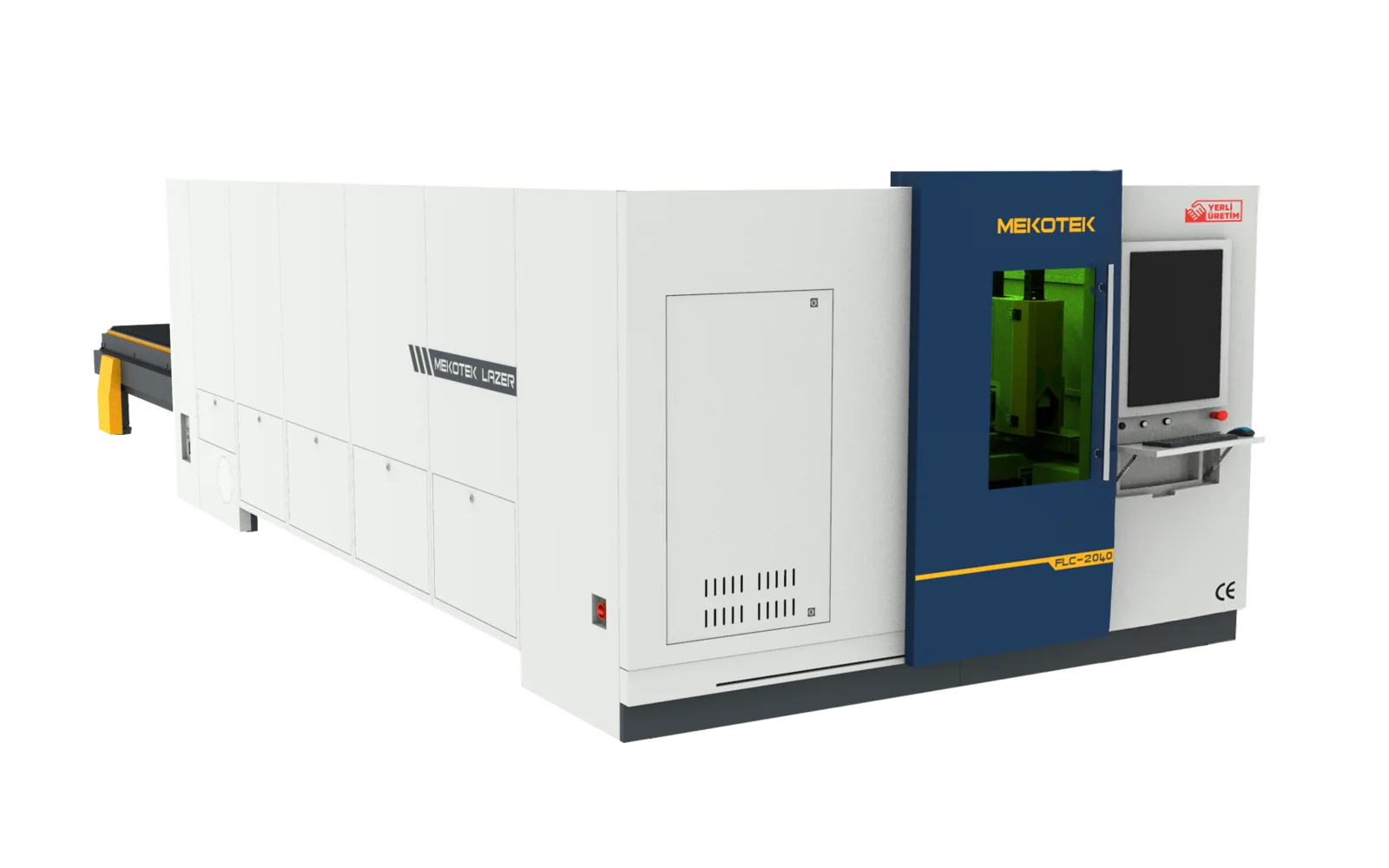
Once you have a machine's operating profile in mind, the current cutting range is a reasonable place to check what configuration actually matches your part mix before you build cost assumptions around a machine that is over- or under-specified for the work.
Depreciation: an accounting entry, not a cash cost
Depreciation allocates the cost of the machine across its useful life on the income statement. It does not represent cash leaving the business in the year it is recorded — the cash already left (or will leave, if financed) at purchase or during the loan term. For a simple cash payback or cash-based ROI calculation, depreciation should not be added as a separate operating cost line, because the upfront investment is already captured once, in full, on the investment side of the calculation. Adding depreciation again would count the same cost twice.
Depreciation does matter elsewhere: it affects taxable income, book profitability, and any capital cost allowance treatment under Canadian tax rules. Those are legitimate considerations for the overall business case, but they belong with your accountant, not inside the cash payback arithmetic below. If the purchase is financed, financing structure also changes the cash profile of the investment; BDC's overview of equipment financing is a reasonable starting point for understanding how loan terms, down payment and interest affect the annual cash outlay, separate from the operating-cost comparison here.
What counts as a measurable benefit
Only include a benefit line if you can point to where the number came from.
- Outsourced spend avoided — the fully loaded baseline from your twelve months of purchase history, for the volume you expect to bring in-house.
- Freight and expedite charges avoided — only the amounts actually documented on past invoices, not an assumed reduction.
- Handling, inspection and rework hours avoided — only where you timed or tracked them; if you did not measure it, do not include it.
- Working-capital effects — reduced buffer inventory and fewer minimum-order-quantity purchases, valued at your carrying-cost assumption, where the current buffer level and MOQ pattern are documented.
- Additional contribution margin from work you could now accept — include this only against specific quotes you actually lost or declined because of outsourced turnaround, each with a value and a reason on file. A general belief that faster turnaround "would probably win more work" is not a measured benefit and should stay out of the model.
Any benefit you cannot trace to a record stays out. A smaller, defensible number is more useful for a capital decision than a larger, hopeful one.
The formulas
With the baseline, operating cost and investment figures assembled, the arithmetic is straightforward:
Annual net cash benefit = annual avoided outsourced and related costs − annual in-house operating cost
Simple payback (years) = total upfront cash investment ÷ annual net cash benefit
ROI (%) = (annual net cash benefit ÷ total upfront investment) × 100
State clearly what the ROI figure includes and excludes: it reflects only the cash lines you measured, over one year, before tax and before any financing cost. It does not include the tax treatment of depreciation, the time value of money, or any benefit you chose to leave out because it was not measurable. For larger capital decisions, or where the payback period runs several years, a discounted cash flow analysis using net present value (NPV) or internal rate of return (IRR) gives a more complete picture and is worth doing with your accountant or finance team, since it accounts for the timing of cash flows and the cost of capital in a way a simple payback calculation does not. You can run your own baseline and operating figures through the ROI calculator to get a payback estimate specific to your numbers rather than a generic one.
Run it three times, not once
A single payback number invites false confidence, because it hides how much the answer depends on assumptions you were not certain about. Run the same model three times:
- Low case — conservative volume and utilisation, higher-than-planned unplanned downtime, higher energy and gas cost.
- Expected case — your working estimate for volume, utilisation, and operating costs.
- High case — utilisation at the upper end of what your part mix and shift plan could realistically support, with operating costs at the lower end of your estimate range.
Then vary one input at a time against the expected case: utilisation or volume, the loaded labour rate, energy and gas pricing, and the unplanned-downtime assumption. Whichever variable moves the payback period furthest is the one the decision is actually sensitive to, and it tells you where to spend time getting a better number before committing capital — rather than treating every line in the worksheet as equally uncertain.
The worksheet
Copy this into a spreadsheet and fill in your own figures. Twelve months of history is enough for the baseline lines; the investment and operating lines are forward estimates.
| Line item | Units | Your figure |
|---|---|---|
| Baseline — outsourced (annual) | ||
| Invoiced spend on outsourced cutting | $ | |
| Freight, both directions, including expedited | $ | |
| Minimum-charge and setup-fee overhead | $ | |
| Handling, receiving, staging hours × loaded rate | $ | |
| Inspection hours × loaded rate | $ | |
| Rework and refit hours × loaded rate | $ | |
| Scrap and re-order cost | $ | |
| Idle downstream hours × loaded rate | $ | |
| Upfront investment | ||
| Machine purchase price | $ | |
| Installation (rigging, electrical, extraction, air, cooling) | $ | |
| Site preparation | $ | |
| Initial software and commissioning | $ | |
| Initial training | $ | |
| In-house operating cost (annual) | ||
| Utilities (electricity, gas/air, cooling) | $ | |
| Direct operator labour | $ | |
| Programming and nesting labour | $ | |
| Assist gas | $ | |
| Consumables (nozzles, optics, filters, slats) | $ | |
| Maintenance and spares | $ | |
| Software maintenance/subscription | $ | |
| Ongoing training | $ | |
| Unplanned-downtime allowance (% of run hours) | $ | |
| Measured benefits (annual) | ||
| Outsourced spend avoided | $ | |
| Freight/expedite avoided (documented) | $ | |
| Handling/inspection/rework hours avoided (measured) | $ | |
| Working-capital / MOQ effect (measured) | $ | |
| Contribution margin from specific lost/declined quotes | $ |
Lead time and supply-chain exposure, quantified honestly
Turnaround improvement is measurable from your own promise dates: compare the delivery dates you have actually quoted customers against the cutting lead time your outsourced supplier has actually delivered, order by order, over the same twelve months used for the baseline. That gap — not an industry assumption — is the turnaround your customers are waiting on today.
In-sourcing also changes supply-chain exposure by removing a single point of failure: an outsourced supplier's capacity problem, quality escape, or business disruption becomes your schedule problem the moment it happens. Whether that risk is worth pricing depends on how concentrated your outsourced spend is with one supplier and how exposed your own delivery commitments are to a single missed shipment — both of which you can see in the purchase-order history you already pulled. Neither of these effects should be asserted as a fixed number; they are read from your own promise dates and your own supplier concentration.
When outsourcing, or a hybrid, remains the better decision
In-house is not automatically the right answer once the arithmetic is favourable on paper. Outsourcing, or a hybrid model that keeps some work in-house and continues to subcontract the rest, remains the better decision when:
- Cutting volume is low or irregular enough that utilisation would be poor regardless of machine choice
- The material or thickness range needed falls outside what you would reasonably buy and run
- There is no floor space, electrical capacity or extraction route without a building project
- There is no realistic staffing plan for who operates and programs the machine
- Capital is better deployed elsewhere in the business this year
- The incumbent supplier is reliable and turnaround is not currently costing you quotes
A hybrid approach — bringing the routine, repeatable, turnaround-sensitive work in-house while continuing to subcontract low-volume or out-of-range parts — is a legitimate landing point, not a compromise.
Check where the delivery date is actually lost
Bringing cutting in-house only delivers the lead-time benefit if downstream operations can absorb the added volume. Bending, welding and finishing capacity can consume the entire benefit: parts come off the laser faster and then wait at an outside bender or in a welding queue, which restores the delay the capital investment was meant to remove. Before committing, trace a handful of recent orders end to end and identify which operation actually held the delivery date — cutting, bending, welding or finishing. If bending is the constraint, press-brake capacity deserves the same TCO treatment as the laser, and the press brake buying guide covers how to size that decision.
What to bring to a vendor conversation
Once the worksheet is filled in, a vendor conversation is more productive with the following in hand: your part families and volumes by thickness and material, your twelve-month outsourced baseline, the utilisation range from your sensitivity analysis, your floor plan and available utilities, and the specific configuration questions the TCO exercise raised about assist gas, consumables and maintenance schedule for the machine class you are evaluating. A live demo is a reasonable next step once those numbers exist, so the conversation is about matching a machine to a documented part mix rather than a general capability discussion.
Related equipment: Fiber laser cutting machines · ROI calculator
See the machines behind the article
Browse the full Mekotek product brochure, or book a live demo and watch a Mekotek fiber laser cut your own material.
Related Articles
What Drives the Cost of a Fiber Laser Cutting Machine
A guide to the variables that move a fiber laser quote and the site and running costs that sit outside it, with a like-for-like quote-comparison checklist.