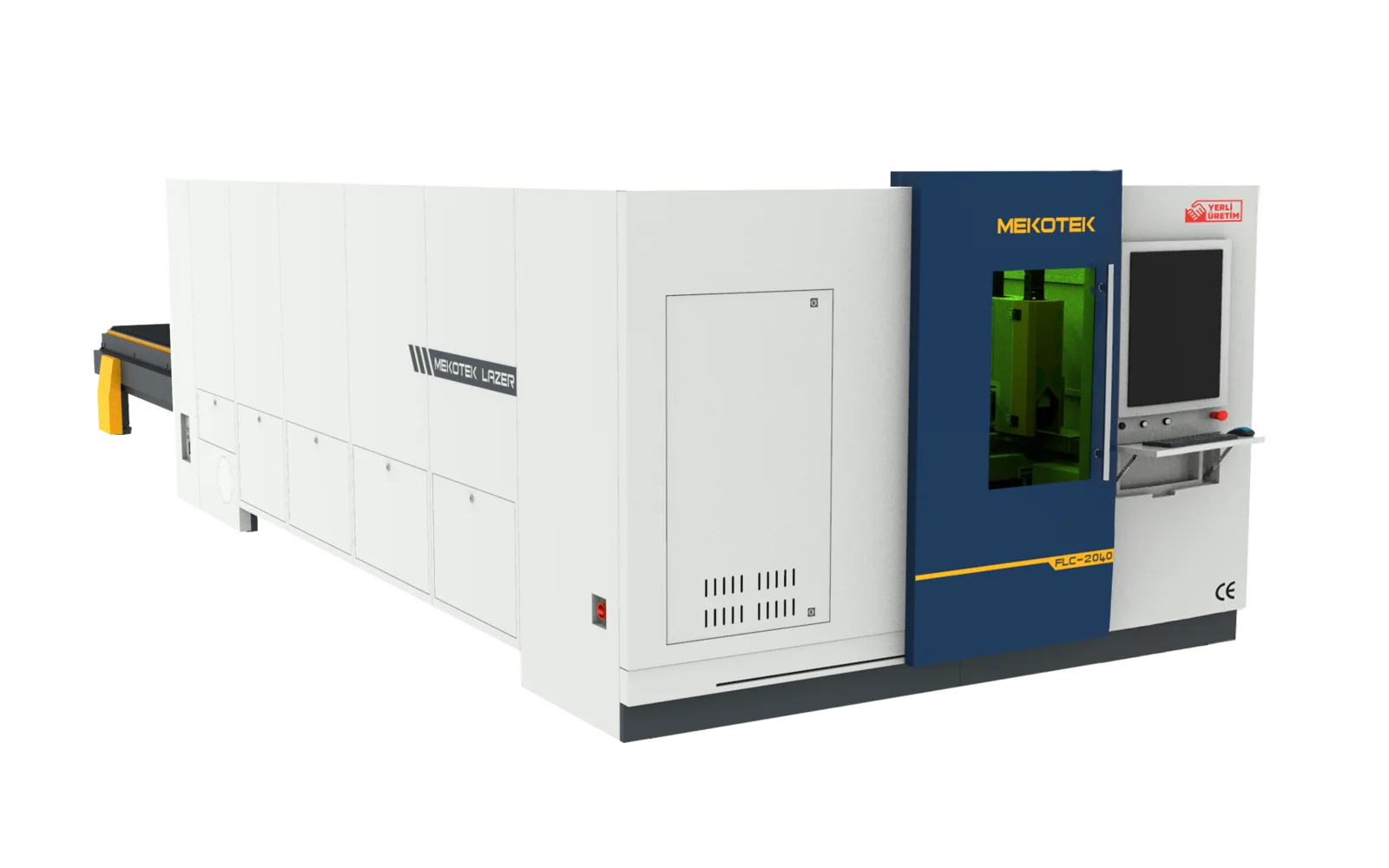
What Drives the Cost of a Fiber Laser Cutting Machine
By Brad Cairns
Published
No two fiber laser quotes describe the same machine, which is why comparing a total price across suppliers is close to meaningless until you know what each number includes. The machine price itself is built from configuration choices. Sitting outside that price are site and installation costs that vary by building and location. And sitting outside both of those are the running costs you carry for as long as you own the machine. This guide works through each layer so you can put two quotes on the same footing.
Configuration variables that move the machine price
Laser power. Higher rated power increases the price of the source, and the chiller sized to support it may cost more as well. Power should be sized to your material mix — see the companion guide on choosing laser power — not selected because a higher number looks safer on paper. Power also interacts with the electrical service the machine draws, which is itself a site cost rather than a line item in the machine price, so a jump in power can trigger a second cost outside the quote entirely.
Work area. A larger bed means a larger frame, longer rails, more extraction ductwork and often a larger chiller and dust collection system. A bigger bed also changes the footprint the machine occupies on your floor, including clearance for loading on all sides and for any material staging area next to it. Confirm the working area matches the sheet size you actually buy — a bed sized for a sheet format you rarely run is capital tied up in unused travel.
Enclosure. An enclosed machine adds an interlocked cabin and integrated extraction over an open-table machine, which changes both the machine price and the site's extraction requirements. It can also change how much shop-level ventilation work is needed, since a contained process concentrates extraction at the source rather than relying on area ventilation.
Automation. Loading and unloading automation, tower storage or shuttle tables add capital cost in exchange for reduced operator handling time. Whether that trade is worth it depends on your shift structure and labour cost, not on the automation itself. A double shuttle-table configuration, for example, adds cost over a single-table machine of the same bed size, but it also changes how much of the cutting cycle is lost to loading — that interaction belongs in your own model, not in a generic recommendation.
Tube capability. A combination sheet-and-tube machine or a dedicated pipe and profile machine costs more than a sheet-only machine of comparable sheet capacity, because it adds a second cutting unit and its own drive system. Loading method for tube stock — manual, semi-automatic or full-automatic — is itself a configuration choice with its own cost and its own effect on how much operator attention the tube side of the machine needs.
Chiller. Chiller sizing follows laser power and duty cycle. Confirm whether the quoted chiller is sized for continuous production at your target power, not just for the machine's rated maximum under intermittent use. An undersized chiller shows up later as thermal limitations on duty cycle, not as a line item you can compare on a spec sheet today.
Filtration. Dust and fume filtration is sized to the enclosure type, extraction airflow and the materials you cut. This is an area where "similar" quotes can diverge sharply, because filtration capacity is easy to under-specify on paper. Ask what airflow rate the filtration is rated for and whether that rating assumes the material mix you actually run, since coated, painted or galvanized material can load a filter faster than bare mild steel.
Motion system and controls. The drive system, controller and axis specification affect both price and the machine's practical cutting speed on your material mix. Two machines quoted at the same power and bed size can still differ here, so ask for the full motion and controller specification rather than relying on the headline spec sheet.
Tooling and software. Confirm what CAD/CAM and nesting software is included versus licensed separately, and what cutting tooling — nozzles, lenses, consumable starter kits — ships with the machine versus what you order afterward. Some suppliers price a bare machine and treat software and starter tooling as separate line items; others bundle them. Neither approach is wrong, but it changes what the headline number means.
Site and installation costs outside the machine quote
A machine price is not an installed price. Budget separately for:
- Electrical service work to bring adequate voltage, phase and amperage to the machine location, including any panel or transformer upgrades.
- Compressed air and gas supply and piping, including a nitrogen generator if you choose one over cylinders or bulk delivery.
- Extraction ductwork from the machine to your dust collection system or to the outside of the building.
- Foundation or floor leveling work, if the model and your existing floor require it.
- Rigging — crane or forklift time, and any building modifications needed to get the machine to its final location.
- Commissioning and first-article time, during which the machine is being set up rather than producing billable parts.
- Operator and programming training time, which is a real cost even where the training itself is provided, because staff are learning rather than running production.
These costs vary by building, region and existing infrastructure, so they cannot be generalized into a rule of thumb — get a site-specific estimate for each before you commit to a delivery date. An older building with an undersized electrical service or a floor that is not rated for a heavy welded frame can add cost unrelated to the machine itself, and that cost is easy to discover late if it is not checked before the order is placed.
Ongoing operating cost categories
Assist gas. Oxygen, nitrogen or compressed air consumption depends on your material mix, thickness and cut settings. Nitrogen consumption in particular varies enough between materials and thicknesses that it is worth modeling against your actual production plan rather than a supplier's general estimate. Whether you supply nitrogen from cylinders, bulk delivery or an on-site generator is itself a cost decision with different capital and per-unit tradeoffs, and the right answer depends on your volume.
Electricity. Running cost scales with laser power, duty cycle and chiller load. Confirm what electrical draw figures a supplier quotes are based on and under what cutting conditions — a figure based on idle or intermittent use will understate what a machine running near-continuous production actually draws.
Consumables. Nozzles, protective lenses and other wear parts are replaced on a schedule tied to usage and material, not on a fixed calendar interval. Ask what a supplier's typical replacement interval assumption is and what triggers it — cutting reflective materials or heavily coated material can wear consumables faster than bare mild steel at the same thickness.
Filter replacement or cleaning. Filtration media and consumables need replacement or cleaning on a schedule tied to how much material you cut and what materials you cut. Budget for this as a recurring cost, not a one-time purchase at commissioning.
Maintenance and service. Ask what routine maintenance the machine requires, what a service call covers under the agreement offered, and how parts and technician access work in your region. Also ask what maintenance tasks your own staff are expected to perform versus what requires a technician visit, since that split affects both cost and how much production downtime a routine service event causes.
Software licensing. Confirm whether nesting or CAD/CAM software carries an ongoing license or subscription fee beyond the initial purchase, and whether that license is tied to a single seat, a single machine, or covers your programming department more broadly.
Training refreshers. Initial training covers commissioning, but staff turnover means training is not a one-time cost. Ask what refresher training or documentation is available after handover, and factor internal cross-training into your own staffing plan.
Comparing quotes on a like-for-like basis
Use a table structured around inclusions and exclusions, and fill in each supplier's answer in the same row before comparing totals.
| Line item | Included in machine price? | Confirmed spec / notes |
|---|---|---|
| Laser source and rated power | ||
| Chiller, sized for continuous duty | ||
| Enclosure and integrated extraction | ||
| Dust/fume filtration system | ||
| Assist gas system or nitrogen generator | ||
| Nesting / CAD-CAM software license | ||
| Starter consumables (nozzles, lenses) | ||
| Rigging and delivery to site | ||
| Commissioning and first-article support | ||
| Operator training | ||
| Electrical/utility work at the site | ||
| Foundation or floor work |
A quote that looks lower before this table is filled in can become the more expensive option once excluded utility, filtration or automation costs are added back in.
Why "similar" quotes need a line-by-line comparison
Two suppliers quoting the same nominal power and bed size can still arrive at very different totals because one has priced a chiller for continuous production duty and the other has priced one for intermittent use, or because one includes a nitrogen generator and the other assumes you already have gas supply on site. Neither number is wrong on its own terms — they describe different scopes. The only way to catch this is to ask each supplier to itemize against the same list, in writing, before you compare totals. The same discipline applies to software and training: a quote that bundles a full nesting license and a week of on-site training looks more expensive than one that treats both as extras, until you price the extras separately for both suppliers.
Financing and total cost of ownership
Whether a machine is purchased outright, financed or leased changes the cash flow pattern of the running costs above but does not change the underlying cost categories themselves. When comparing financed offers, apply the same inclusion/exclusion discipline to what is being financed — a lease that covers only the machine and excludes installation, tooling and software will look different once those costs are added on top, whether they are paid up front or financed separately.
Building your own cost model
Once you have a filled-in comparison table for each supplier, build a simple running model: machine and installation cost as a one-time outlay, then gas, electricity, consumables, filtration and maintenance as recurring monthly or per-part costs against your expected production volume. This is more useful than a single blended "cost per part" figure from a vendor, because it shows which cost categories are sensitive to your own volume and material mix assumptions, and which are fixed regardless of how much you run the machine. Keep the model in a form you can update — as your material mix shifts, the categories fixed at low volume may become the ones worth negotiating hardest next time.
Modeling the decision
Once you know what each quote actually includes, run the numbers against your own production plan rather than a generic payback assumption. The calculator on this site is built for exactly that — enter your own volumes and cost inputs rather than relying on a supplier's example scenario. If you are still deciding whether to buy at all, the companion guide on the hidden costs of outsourcing versus bringing cutting in-house walks through the comparison from the other direction.
See the machines behind the article
Browse the full Mekotek product brochure, or book a live demo and watch a Mekotek fiber laser cut your own material.
Related Articles
Outsourcing vs. In-House Laser Cutting: Cost, ROI and Payback
A framework for pricing outsourced cutting against in-house TCO — payback, ROI, sensitivity analysis and a worksheet built from your own purchase orders.