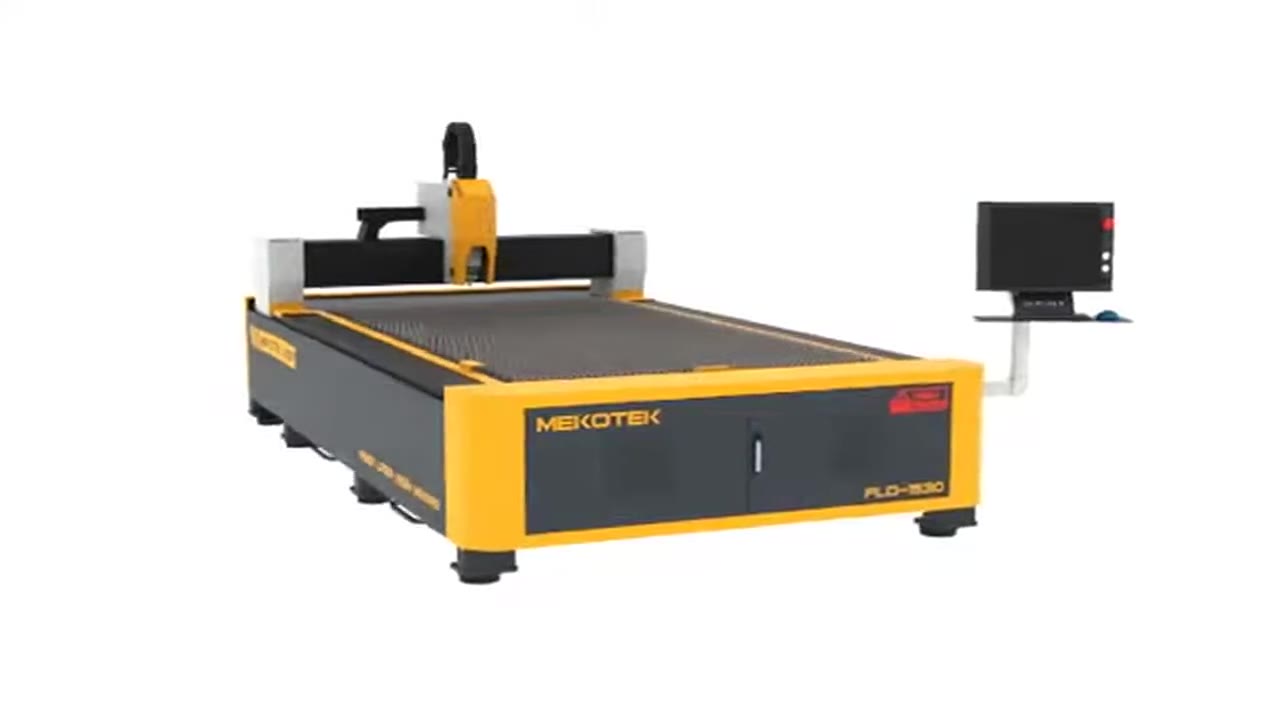
Measuring Waste and Energy in a Laser Cutting Cell
By Brad Cairns
Published Updated
A laser cutting cell generates several streams of measurable waste and consumption that shops often track loosely, if at all — nested sheet remnants, assist gas, electricity, filter media, coolant and rework scrap. Before any of these can be improved, they have to be measured against a real baseline from your own operation. This article works through what is measurable in a typical cell, how to measure it, what to compare it against, and which parts of each stream are genuinely within a shop's control.
Material yield and nesting efficiency
Material yield is the proportion of a sheet's area that ends up as finished parts rather than remnant or scrap, and it is one of the more directly controllable numbers in a cutting operation because it depends heavily on nesting software settings and part mix, not on the machine itself.
How to measure it: track sheet area consumed against finished part area over a representative run of jobs, using your nesting software's own reporting if it provides one, or by calculating it manually from part nest layouts for a sample of jobs.
What to compare against: your own historical yield on comparable part mixes and sheet sizes, tracked over time as a trend rather than a single snapshot, since yield varies with part geometry and order mix from job to job.
What is in your control: nest density settings, part rotation and mirroring options, common -line cutting where geometry allows, and batching compatible parts from different orders onto the same sheet.
Remnant management
Offcuts and remnants left after nesting are a second, related stream: material that was not consumed by the nest but is not scrap either, if it is large enough to reuse on a future job.
How to measure it: track remnant weight or area generated per period, and separately track how much of that remnant is actually returned to stock and consumed on a later job versus scrapped.
What to compare against: your own remnant-to-scrap ratio over time — a rising share of remnants ending up scrapped rather than reused is a signal that remnant tracking or storage is breaking down, independent of nesting quality.
What is in your control: a remnant tracking and storage system that makes offcuts findable and usable by estimating and nesting staff, and a minimum-size threshold below which a remnant is not worth tracking and should be scrapped immediately.
Scrap segregation and recovery value
Metal scrap has recovery value that depends on how well different alloys and grades are kept separate — mixed scrap streams are worth less than clean, segregated streams.
How to measure it: track scrap weight by material grade against your scrap buyer's settlement records, and compare the price realized per pound against the buyer's published or quoted rate for clean, segregated material of that grade.
What to compare against: the gap between what you are actually paid and what a clean stream of the same material would command, which quantifies the cost of cross-contamination in your scrap bins.
What is in your control: bin labeling and location, operator training on segregation, and a process for handling small offcuts and drops that tend to end up in the wrong bin under time pressure.
Electricity consumption and demand charges
A laser cutting cell draws power for the laser source, chiller, extraction and any ancillary equipment, and utility billing often includes a demand charge based on peak draw, not just total consumption.
How to measure it: use utility bills and, where available, submetering on the cell itself to separate its consumption from the rest of the shop; note both total kilowatt-hours and peak demand.
What to compare against: your own consumption per hour of actual cutting time versus idle or standby time, since a cell that sits energized but not cutting for long stretches affects both figures without producing parts.
What is in your control: scheduling that reduces idle energized time, and awareness of whether your own peak demand is being driven by cutting itself or by overlapping equipment startups across the shop.
Compressed air and assist gas consumption
Assist gas — oxygen, nitrogen or compressed air depending on material and process — is consumed per cut and varies with material thickness, cut quality settings and gas pressure settings.
How to measure it: track gas cylinder or bulk tank consumption against cutting hours or parts produced, and compare consumption across similar jobs run with different pressure or quality settings.
What to compare against: your own consumption on comparable jobs over time, and the supplier -quoted consumption rate for your specific gas delivery system, to check whether actual use is tracking expectations or drifting.
What is in your control: pressure settings tuned to the specific cut quality required rather than a single conservative setting used across all jobs, and leak checks on gas lines and fittings on a regular schedule.
Filter media consumption and disposal
Fume extraction systems consume filter media that has to be replaced on a schedule and disposed of, sometimes as a controlled waste stream depending on the material being cut.
How to measure it: track filter replacement frequency and disposal cost per period, and note whether replacement is happening on a fixed schedule or being driven by actual differential pressure readings from the extraction system.
What to compare against: the manufacturer's specified filter life for your specific extraction system and material mix, to see whether your replacement interval is close to that specification or diverging from it.
What is in your control: switching from a fixed replacement calendar to a pressure-triggered replacement schedule if your extraction system supports monitoring, which avoids both premature replacement and running filters past their effective capacity.
Coolant
Chiller coolant requires periodic replacement and, in some jurisdictions, disposal as a regulated waste depending on its composition.
How to measure it: track coolant volume replaced and disposal cost per period, and log coolant condition checks against the manufacturer's maintenance schedule for your specific chiller.
What to compare against: the chiller manufacturer's specified coolant service interval, confirmed for your specific model rather than assumed from a different piece of equipment.
What is in your control: following the specified service interval and condition-checking protocol, and correcting any operating condition — like a chiller running outside its rated temperature range — that is shortening coolant life.
Scrap generated by rework
Parts that fail inspection and require rework or scrapping are a waste stream distinct from nesting scrap, and one that is often under-tracked because it gets absorbed into general shop floor activity rather than logged.
How to measure it: track rework and scrap parts against total parts produced, broken out by cause where your quality system allows — programming error, material defect, machine condition, operator error.
What to compare against: your own rate over time by cause, which tells you whether rework is trending up or down and which cause is driving it, rather than a single aggregate number that hides the underlying driver.
What is in your control: whichever cause dominates your own data — programming error is addressed through programming review and simulation, machine condition through maintenance, and operator error through training and work instructions.
Consumables tied to cut quality settings
Nozzles, lenses and other consumables wear at a rate tied to the cutting parameters used — gas pressure, focus position and cutting speed all affect how quickly a nozzle or lens degrades, independent of the total hours the machine runs.
How to measure it: log consumable replacement against cutting hours and against the specific parameter sets used, so a change in wear rate can be traced to a parameter change rather than treated as random variation.
What to compare against: the equipment manufacturer's expected service life for the specific consumable and parameter range you are running, confirmed for your machine rather than assumed from a different model or a different material mix.
What is in your control: matching parameter sets to the job rather than defaulting to one aggressive setting across dissimilar materials, and tracking whether a specific job type is consistently driving faster wear than others.
Idle and standby energy between jobs
A cell that stays energized between jobs — laser source on standby, chiller running, dust collection idling — consumes power without producing parts, and that consumption is easy to overlook because it does not show up as a line item the way a large single job does.
How to measure it: compare submetered or estimated consumption during scheduled downtime against consumption during active cutting, over a period long enough to capture normal scheduling gaps rather than one unusual week rather than a normal one.
What to compare against: your own prior-period idle consumption, tracked as a trend, since the relevant question is whether idle time and idle draw are increasing or decreasing as scheduling practices change.
What is in your control: shutdown and standby procedures for planned gaps between shifts or jobs, and scheduling practices that reduce the number of separate energize-and-idle cycles a cell goes through in a given period.
Putting the measurements together
Individually, each of these streams is a small line item. Tracked together against your own baseline over a full reporting period, they add up to a picture of where a cutting cell's real costs and waste are concentrated, and that picture is specific to your part mix, material mix and shift pattern — not to a general industry pattern. A shop that measures material yield closely but ignores idle energy, or that tracks gas consumption but not filter life, will misjudge where its next improvement effort should go. The measurement habit described above is only useful if it covers enough of these streams to show which one is actually the biggest and most controllable in your specific operation, rather than the one that happens to be easiest to track.
Building the measurement habit
None of these streams is worth measuring once and setting aside. The value comes from tracking each one over time against your own baseline, so that a change in nesting software, gas settings, maintenance schedule or operator training shows up as a measurable shift you can attribute to that specific change, rather than a general impression that things have gotten better or worse.
Sources
This source describes general industrial energy efficiency context, not Mekotek product specifications or performance claims. If you are evaluating equipment as part of an energy or waste reduction plan, the equipment range and cost calculator can help you compare configurations against your own consumption data.
See the machines behind the article
Browse the full Mekotek product brochure, or book a live demo and watch a Mekotek fiber laser cut your own material.
Related Articles
Industry 4.0 in a Fabrication Shop: What It Means in Practice
Industry 4.0 done in order: clean data first, dashboards last. Here is the sequence a fabrication shop can actually implement, and what breaks when it is skipped.
Reshoring Decisions: Which Parts to Bring Closer, and How
A framework for deciding which part families are worth bringing closer to home: total landed cost, risk exposure, required capability, and a staged rollout.

Canada's 2026 Manufacturing Outlook: What to Plan Around
Five planning themes for Canadian fabricators in 2026 — automation, labour availability, supply-chain resilience, input costs and technology adoption — with what to watch and do.