Laser Cutting Safety: A Manufacturer's Planning Guide
By Brad Cairns
Published Updated
Before a fiber laser is installed, someone in the building has to decide where it goes, who is allowed near it, how the fume it generates is handled, and what happens if a sheet catches fire on the table. None of that work is done by the machine itself. This guide sets out the planning questions an owner or EHS lead should be answering during the buying and installation process. It is general guidance built from recognized occupational safety sources, not a compliance opinion for your facility: the binding requirements for your shop come from your provincial OSH regulator and from your insurer, and the machine-specific requirements come from that machine's own documentation.
Hazard categories to plan around
A laser cutting cell introduces several distinct hazard categories, and a safety plan that only addresses the beam itself leaves several of these categories unaddressed.
- Direct and reflected beam. Fiber laser wavelengths are not visible and can cause eye and skin injury without the operator perceiving the exposure at the time. Reflected beam off metal surfaces is a real hazard path, not just the direct beam.
- Fume and particulate. Cutting generates metal fume and particulate that varies with material and coating; this is a respiratory and indoor air quality hazard, and for some coatings and alloys a hazardous-substance handling question as well.
- Fire. Oil-coated material, some coatings, thin material with a self-sustaining oxidation reaction, and accumulated dross under the table are all ignition paths.
- Noise. Assist gas flow and material handling equipment contribute to a noise environment that should be assessed like any other in the plant.
- Electrical. High-voltage components inside the enclosure are a lockout/tagout and qualified-access issue, not something for general staff to open.
- Stored energy. Capacitors and pressurized gas systems retain energy after the machine is powered down, which is a lockout/tagout planning point, not just an electrical one.
- Material handling. Sheet loading, unloading, and part removal introduce crush, pinch, and sharp-edge hazards that are independent of the laser process itself.
Start with a site risk assessment
Before installation, walk the hazards above against your specific floor plan: where the machine sits relative to walkways and other workstations, what is upstream and downstream of it in your process flow, who needs access to load and unload versus who needs access for maintenance, and what your existing fire suppression and ventilation systems can and cannot handle. The risk assessment is what tells you what controls you actually need — a shop running exclusively coated or painted material has a different fume and fire profile than one running bare mild steel, and the assessment should reflect your actual material mix, not a generic one.
Controls in order: engineering, administrative, PPE
Work through controls in that order rather than reaching for PPE first. An engineering control that removes the hazard — full enclosure, interlocked guarding, integrated extraction — protects everyone near the machine regardless of whether a procedure is followed correctly that day. Administrative controls — restricted access, standard procedures, posted warnings — reduce exposure for people who are trained and following the process. PPE is the last layer, protecting the individual when the hazards above have already been controlled as far as practical, not a substitute for them.
Guarding and interlocks
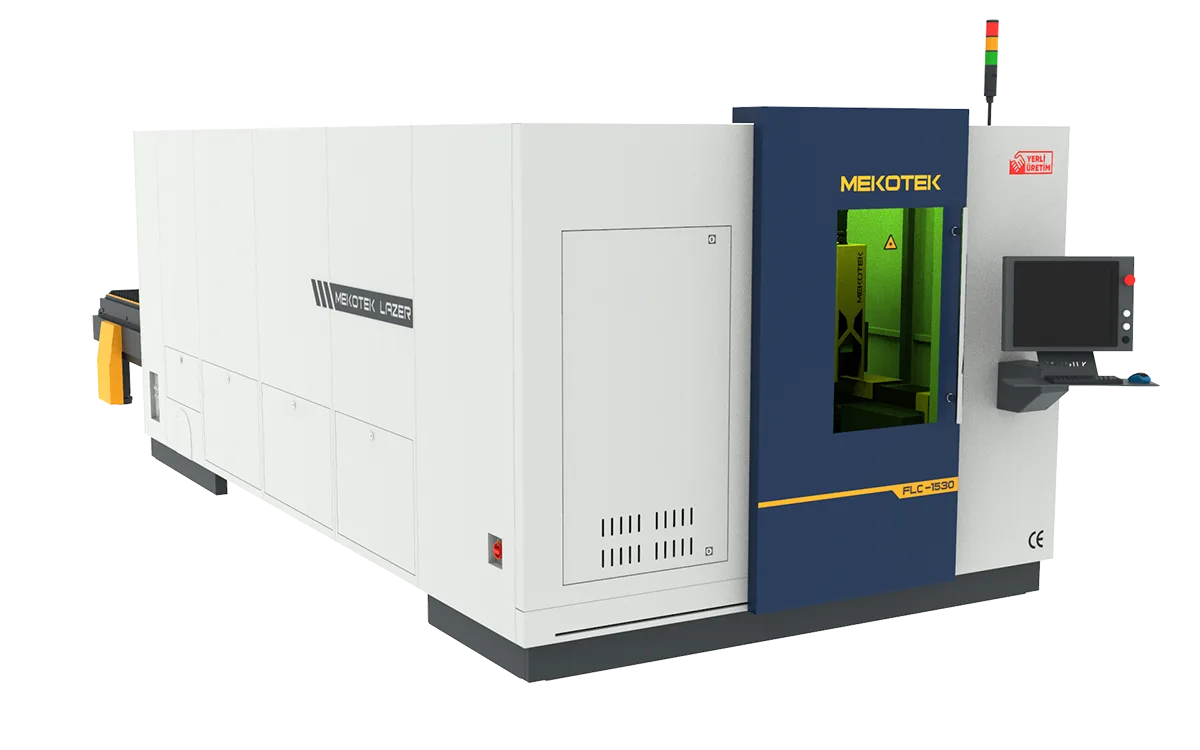
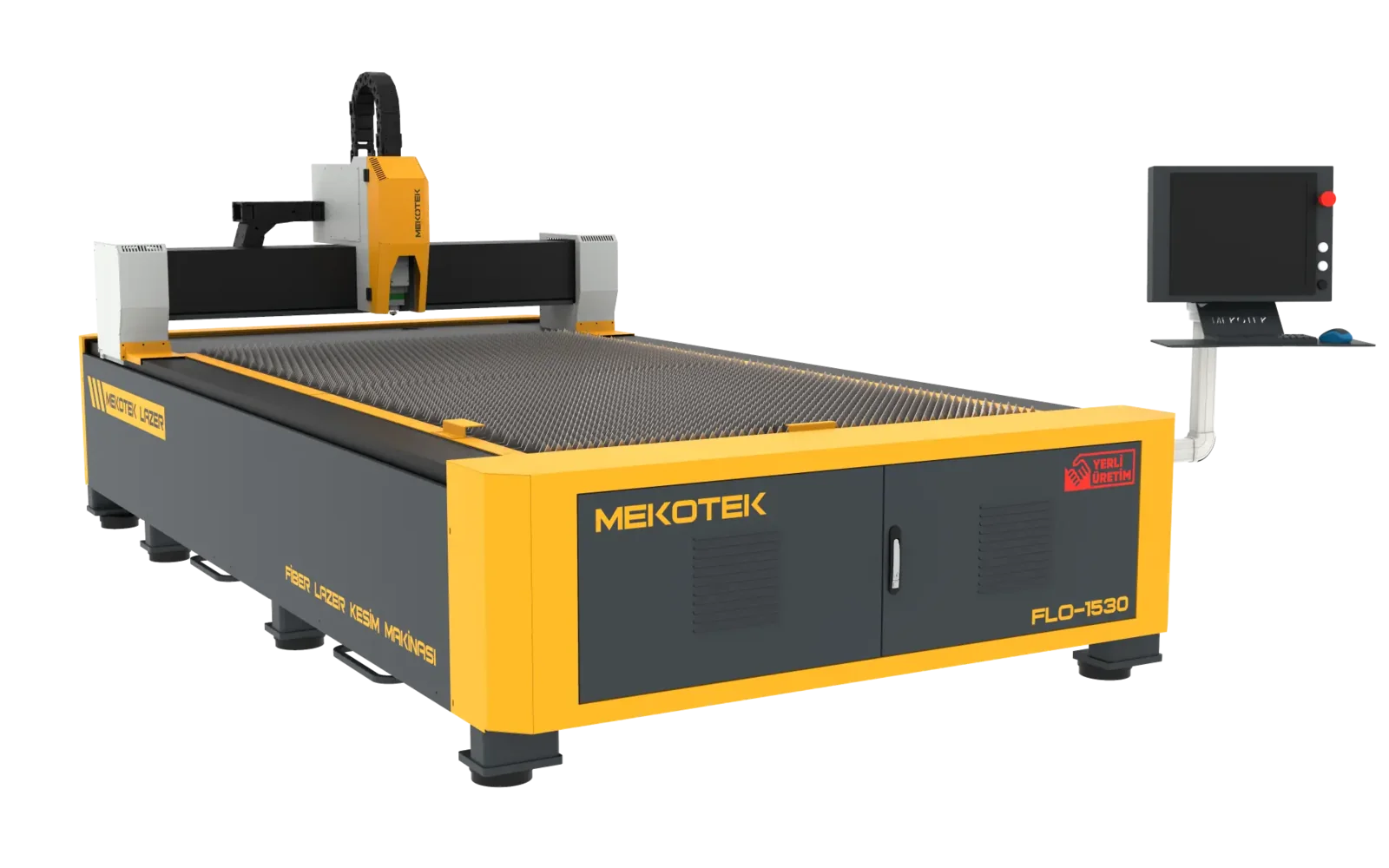
Confirm what guarding and interlocking the specific machine you are evaluating provides as standard, and what it requires you to supply. An enclosed laser and an open-bed laser present different guarding requirements by design, and the difference should factor into your site plan, not just your purchase price comparison — see our enclosed and open family pages for the general design distinction, and confirm the guarding specification for the exact model against its own documentation. Interlocks on access doors and covers should be verified as functional on installation and checked periodically as part of your maintenance program, not assumed to remain correct indefinitely.
Eyewear: why the answer is machine-specific
Laser safety eyewear has to be matched to the wavelength and power of the specific laser, and the correct specification for your machine comes from that machine's documentation, not from a general article about fiber lasers. Do not select eyewear based on what another shop uses or what a supplier of a different machine recommends. If your process or maintenance work requires personnel to be near an open beam path, confirm the required eyewear rating with the machine manufacturer's documentation before anyone works near it.
Fume extraction and filtration
Fume extraction should be sized to your material mix and duty cycle, not selected once and assumed adequate as production volume or material type changes. Points worth deciding explicitly:
- What extraction capacity and filtration stage is appropriate for your material and coating mix, confirmed against the extraction system manufacturer's own guidance.
- How filter condition is monitored — a pressure-drop indicator or a fixed inspection routine — rather than left until airflow is visibly reduced.
- How spent filters are handled and disposed of, since filtered particulate from some alloys and coatings may be a regulated waste stream in your jurisdiction.
Fire prevention
Oil-coated stock, some painted or coated sheet, and thin-gauge material are conditions that can produce sustained combustion rather than a momentary flare. Plan for it directly: clear dross and slag from under the table on a routine that matches how often it accumulates for your material mix, keep a suitable fire suppression method at the workstation, and build a documented process for what happens if a fire starts, including who shuts the machine down and how. This is a plan to write and rehearse before the first production shift, not to improvise the first time it happens.
Lockout/tagout
Because the machine retains stored electrical and pneumatic energy after shutdown, lockout/tagout procedures need to account for that stored energy specifically, not just the main power disconnect. Anyone who opens the enclosure for maintenance, clears a jam, or services extraction equipment should be working from a documented LOTO procedure specific to that equipment, and that procedure should be verified against the machine's own documentation rather than adapted from a different machine's manual.
Training and competency records
Training is only useful if it is documented in a way that survives staff turnover: who was trained, on what version of the procedure, by whom, and when it needs to be refreshed. Keep records for beam safety, extraction and fire procedures, LOTO, and material handling separately if your process assigns them to different roles, so that a gap in one area is visible rather than hidden inside a general "safety training complete" record.
Incident review
When a near-miss or incident occurs — including a head collision, a fire event, or an extraction alarm — review it against the hazard categories above rather than treating it as an isolated operator error. A near-miss that traces back to a guarding gap or an extraction capacity issue will recur under different circumstances if the review stops at "the operator should be more careful."
Who sets the binding requirement
This guide describes categories of hazard and control that are broadly recognized in occupational safety practice. It does not state what is legally required in your province, what your insurer requires as a condition of coverage, or what any specific Mekotek machine is certified or rated to. Those three things — your provincial OSH regulator, your insurer, and the machine's own documentation — are the actual sources of binding requirement for your shop, and each should be consulted directly during planning rather than inferred from a general article.
Sources
- OSHA, Laser Hazards
- OSHA Technical Manual, Section III Chapter 6 (health hazards)
- CCOHS, OSH Answers — Lasers These sources support generic industry and regulatory context only, not Mekotek product specifications or certifications.
Documenting the plan for an audit or a claim
Insurers and regulators generally want to see evidence of a process, not just a good outcome. Keep the risk assessment itself, the guarding and interlock verification performed at installation, the extraction system's sizing rationale, the fire prevention plan, LOTO procedures, and training records together in a form that can be produced on request. A shop that can show when each of these was last reviewed, and by whom, is in a materially different position after an incident than one that can only describe its practices verbally. Review the full set on a schedule that your insurer or regulator expects, and whenever the process, material mix, or layout changes enough that the original risk assessment no longer describes the floor as it actually operates.
Coordinating with your equipment and extraction suppliers
Neither the laser manufacturer nor the extraction equipment supplier can complete this plan for you, but each holds pieces of it you need. Request the guarding, interlock, and — where relevant — beam-path documentation from the machine supplier in writing before installation, not verbally during a sales conversation. Request sizing calculations and filter specifications from the extraction supplier based on your stated material mix and duty cycle, and revisit that sizing if your material mix changes materially after installation. Treat both as inputs to your own risk assessment rather than as a substitute for it — the supplier's documentation tells you what the equipment is designed to do; your assessment is what tells you whether that is adequate for your specific floor.
Roles and who owns each control
A safety plan that names no owner tends to decay after the installation team leaves. Assign each of the following explicitly, in writing, before production starts:
- Site EHS lead. Owns the risk assessment itself, keeps it current when the process or layout changes, and is the point of contact for the provincial OSH regulator and the insurer.
- Machine owner or supervisor. Owns verifying guarding and interlock function at installation and on a recurring schedule, and owns the LOTO procedure specific to the machine.
- Maintenance lead. Owns filter condition monitoring, extraction system upkeep, and stored-energy verification before any enclosure is opened for service.
- Shift supervisor or lead operator. Owns day-to-day access control — who is permitted near the machine during operation and during loading and unloading — and owns the immediate response if a fire or extraction alarm occurs during a shift.
A shop of one or two people may combine these roles, but each responsibility should still be written down individually rather than folded into one undifferentiated safety line item.
A pre-installation safety checklist
Before the machine is powered on for the first time, confirm each of the following rather than assuming it was handled during the sale or the installation visit:
- [ ] Site risk assessment completed and matched to the actual floor plan and material mix.
- [ ] Guarding and interlock function verified against the machine's own documentation.
- [ ] Fume extraction sized and installed for the intended material and coating mix, with a filter condition monitoring method in place.
- [ ] Fire suppression equipment appropriate to the process is present at the workstation and staff know how to use it.
- [ ] LOTO procedure written for the specific machine, covering stored electrical and pneumatic energy, not just the main disconnect.
- [ ] Eyewear requirement confirmed against the machine's documentation for anyone who may be near an open beam path.
- [ ] Training records structure in place before the first operator is signed off.
- [ ] Named owner for each role above, with a documented backup.
Periodic inspection intervals
Controls that are correct at installation drift over time if nobody checks them again. Build a recurring inspection routine rather than relying on the installation verification to hold indefinitely:
- Daily, by the operator: enclosure and access door condition, obvious extraction airflow or alarm issues, dross and slag accumulation under the table.
- Weekly or per a schedule matched to duty cycle, by maintenance: filter pressure-drop reading or equivalent condition check, interlock function on access doors, visual check of fire suppression equipment.
- On the insurer's or manufacturer's stated schedule, by maintenance or a qualified contractor: stored-energy verification and electrical enclosure inspection.
- After any incident or near-miss, by the EHS lead: full review of the hazard category involved, not just the specific control that failed.
Record the date, the person who performed each check, and the result — a schedule that exists only as an intention is not a control.
See the machines behind the article
Browse the full Mekotek product brochure, or book a live demo and watch a Mekotek fiber laser cut your own material.
Related Articles
Laser Cutting Team Readiness: Roles, SOPs and Operator Training
Who needs to own what before a laser runs production, the SOPs worth writing down first, and how to sign off and record operator competency.

Laser Cutting Troubleshooting and Maintenance Guide
A symptom-first guide to fiber laser cut defects, plus a maintenance routine organized by who owns the check rather than by asserted time intervals.