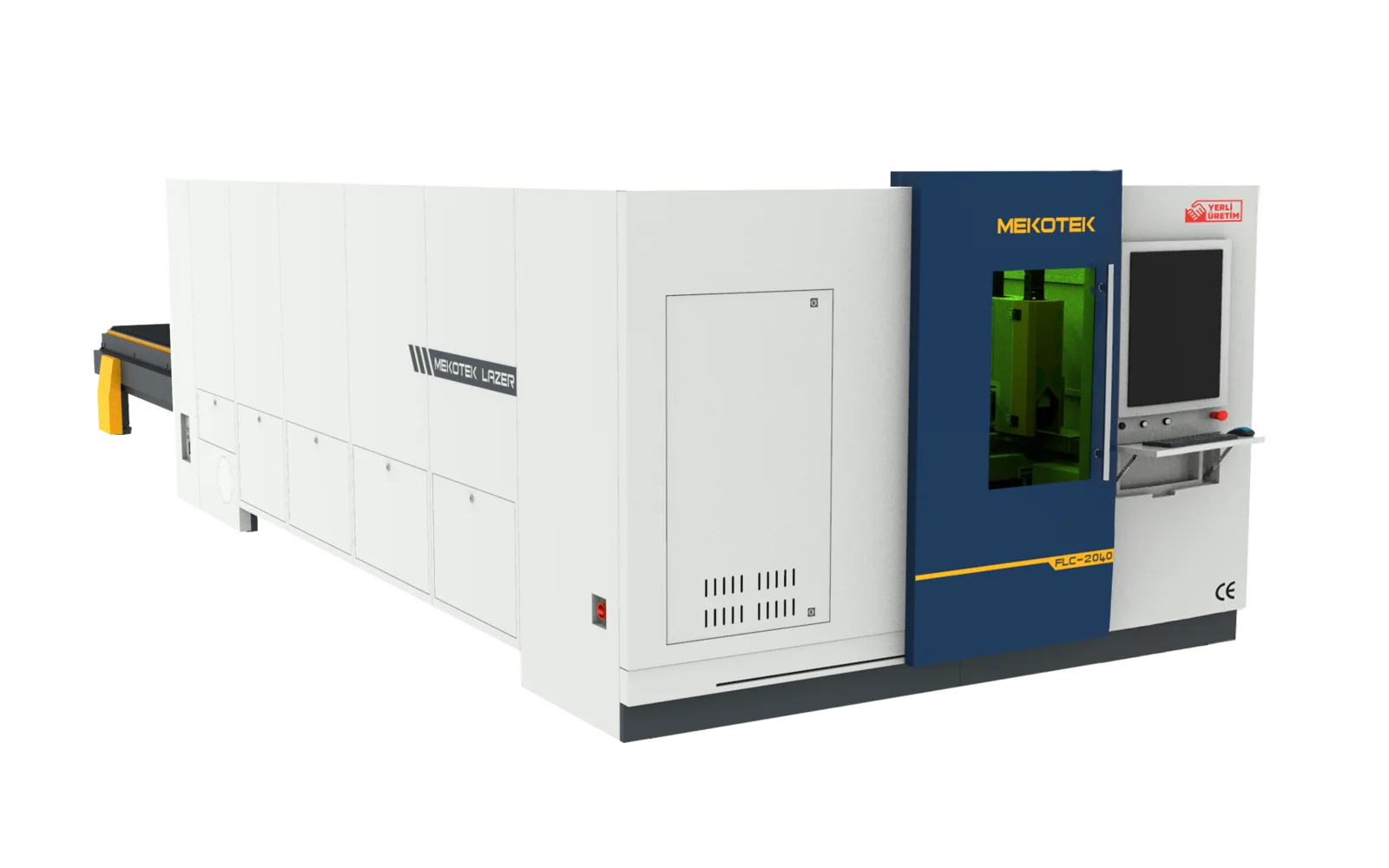
Tax Treatment of Manufacturing Equipment: What to Ask Your Accountant
By Brad Cairns
Published Updated
Buying a fiber laser, a press brake or any other piece of manufacturing equipment changes your tax position, but exactly how depends on details specific to your business — the asset class, your province, your corporate structure, and rules that are updated by the Canada Revenue Agency over time. This article does not tell you what to deduct or when. It explains the concepts well enough that you can bring a specific, informed set of questions to your accountant before or shortly after the purchase, rather than finding out the treatment after the fact.
Capital cost allowance and the idea of a class
Equipment you buy for the business is generally not written off as a single expense in the year you buy it. Instead, the Canada Revenue Agency groups depreciable property into prescribed classes, each with its own rules for how the cost is written off over time through capital cost allowance, commonly abbreviated CCA. The class a piece of equipment falls into — and the treatment that class receives — is a determination your accountant makes based on the nature of the asset and the current CRA rules, not something to assume from a general description online.
Questions to bring to your accountant:
- Which CRA class does this specific piece of equipment fall into, and why?
- Has that classification, or the treatment attached to it, changed in the current tax year?
- Does the equipment need to be in use, not just purchased, before any allowance can be claimed?
The Accelerated Investment Incentive
The CRA has documented an Accelerated Investment Incentive that changes the normal CCA timing rules for eligible property acquired within defined periods. The mechanism and its current parameters — what property qualifies, what the enhanced first-year treatment looks like, and when it applies — are set out on the CRA's own page and have been subject to change since the incentive was introduced. Rather than restate figures here that may be out of date by the time you read this, the right move is to open the CRA page directly with your accountant and confirm how it applies to your specific purchase and tax year.
Questions to bring to your accountant:
- Does this incentive currently apply to the equipment I am buying, given its class and the date of acquisition?
- Has the incentive's structure changed since I last checked, and does that change my timing decision — buy now or wait?
- Does claiming this incentive interact with any provincial credit I might also claim on the same asset?
Expense versus capitalized asset
Not everything you buy for the shop is treated the same way. A consumable, a small tool, or a minor repair may be deductible as a current expense in the year you incur it. A piece of equipment with a useful life extending beyond the current year is generally capitalized — recorded as an asset and written off over time through CCA rather than expensed all at once. Where the line falls between a repair and a capital improvement, or between a minor tool purchase and a capitalizable asset, is a judgment call with real tax consequences, and it is not always obvious from the invoice alone.
Questions to bring to your accountant:
- Is this purchase, or any part of it — installation, a control upgrade, a rebuild — a current expense or a capital addition?
- If I am upgrading an existing machine rather than buying new, how is that treated differently?
Lease payments versus ownership
Leasing a machine instead of buying it changes the tax picture as much as it changes the balance sheet. Lease payments under an operating-style lease may be deductible as a current business expense as they are paid, rather than depreciated over time through CCA, depending on the lease terms and current CRA rules. Under a capital or finance lease, where the accounting treatment looks more like ownership, the tax treatment can look more like an owned asset. Which category a specific lease falls into for tax purposes depends on the terms of that lease and current rules, not on what the lease is called in the contract.
Questions to bring to your accountant:
- Does this specific lease agreement get treated as an expense or as a capitalized asset for tax purposes?
- Does the answer change my comparison between leasing and buying, beyond the cash-flow comparison alone?
The financing guide covers the cash-flow and balance-sheet side of loan versus lease; the tax treatment is a separate question layered on top of that comparison, and it belongs with your accountant before you choose a structure, not after.
Provincial variation
Federal CCA rules and the Accelerated Investment Incentive apply across Canada, but provinces set their own corporate tax rates, and some provinces run their own credits or incentives for manufacturing and processing investment, separate from anything federal. Whether a provincial credit applies to your specific purchase, and how it stacks with federal treatment, depends on your province and the current state of that province's own programs.
Questions to bring to your accountant:
- Does my province currently offer a manufacturing and processing credit or incentive that applies to this purchase?
- If so, does claiming it affect the federal treatment, or can both be claimed together?
Interaction with grants
If any part of the equipment purchase is funded by a federal, regional or provincial grant or contribution, that funding can affect the amount you are entitled to depreciate for tax purposes — the capital cost for CCA purposes is often reduced by the amount of assistance received. The grants overview covers how to check what programs might apply to a project; the tax consequence of accepting that funding is a separate step your accountant needs to walk through once you know the amount and the program's terms.
Questions to bring to your accountant:
- If I receive grant funding for part of this purchase, how does that change the capital cost I can claim?
- Does the timing of when the grant is received versus when the equipment is acquired matter for the calculation?
Expense versus capital: a quick reference
This is not a rule to apply on your own — it is a way to sort your own invoices before the accountant meeting so the conversation is faster and more specific.
| Item | Generally leans toward | Why it is not automatic |
|---|---|---|
| Replacement consumable (nozzles, lenses, filters) | Current expense | Short useful life, routine replacement |
| Routine maintenance or a like-for-like repair | Current expense | Restores function, does not extend useful life or add capability |
| New machine purchase | Capital addition | Useful life extends well beyond the current year |
| Installation and rigging tied to a new machine | Often capitalized with the machine | Cost of bringing the asset into use, not a standalone expense |
| Control or software upgrade that adds capability | Depends on the specifics | Could extend useful life or add capability, which pushes toward capital treatment |
| Small hand tool or fixture below a low-value threshold | Often expensed | Some businesses and some CRA guidance treat minor items differently by value |
Bring the actual invoices, not just this table, to the accountant conversation — the classification depends on the specific work performed, not the category label a supplier used on the quote.
Meeting checklist: what to bring your accountant
- The equipment invoice or purchase agreement, itemized by machine, options and any bundled installation or infrastructure work.
- The financing or lease agreement, if the purchase was not paid in cash.
- Documentation of any grant, contribution or rebate applied to the purchase, including the program name and the amount received or expected.
- The date the equipment was delivered and the date it was placed into use, if different.
- Your province of operation and whether the business already claims any provincial manufacturing and processing credit.
- A note on whether this purchase replaces an existing asset that is being disposed of or traded in, since disposal of the old asset has its own tax consequence.
- Your current fiscal year end, since acquisition timing relative to that date can affect what can be claimed and when.
Walking in with this list assembled turns the meeting from a fact-finding exercise into a decision — which is the point of preparing it in advance.
Bringing it to your accountant
None of the above is a substitute for professional advice on your specific numbers, and none of it should be treated as a deadline or an eligibility guarantee — CRA rules, incentive parameters and provincial programs are updated on their own schedule. The practical sequence is to gather the purchase details — invoice, installation costs, financing structure, any grant funding — and bring the specific questions above to your accountant before the purchase closes, so the tax treatment is confirmed rather than assumed.
Sources
This source describes a federal tax mechanism and is not tax advice and not a Mekotek product claim. Confirm current rules and how they apply to your business with a qualified accountant or the CRA directly. If you have questions about the equipment itself, rather than its tax treatment, contact Mekotek.
See the machines behind the article
Browse the full Mekotek product brochure, or book a live demo and watch a Mekotek fiber laser cut your own material.
Related Articles
Canadian Funding Programmes for Manufacturing Equipment
A guide to the types of Canadian funding programmes for manufacturing equipment, how to verify current eligibility yourself, and the sequencing mistakes that disqualify applicants.
Laser Equipment Financing in Canada: Lease, Loan or Buy
A comparison of the financing structures available for a fiber laser purchase in Canada, what a lender actually reviews, and the questions to settle before you sign.